Published July 7, 2026 · Updated July 7, 2026 · 6 min read
The short answer
Most California homes need about 14–24 panels — a 6–10 kW system at today's 400–450 W residential panels. Size it in four steps: read your usage off the bill, annualize it, divide by California production of roughly 1,400–1,600 kWh per kW per year, then divide by panel wattage. Under NEM 3.0, right-sizing plus a battery beats overbuilding.
By OC Solar
The quick answer: about 14–24 panels for most California homes
Most California homes need somewhere between 14 and 24 solar panels — a 6–10 kW system at the 400–450 W panel sizes standard in 2026. Smaller homes with modest bills can pencil at 8–9 panels, while large all-electric homes with EV charging can push past 30. The exact count comes from one number: how much electricity your household actually uses.
That's also why nobody can honestly quote you a panel count from the curb. For context, the average California household uses about 500 kWh a month per the U.S. EIA — but averages hide a huge spread between a coastal condo and an inland two-story with AC, a pool pump, and an EV. The four-step method below turns your own utility bill into a system size; it's the same math we run, with much better data, when we design a system.
The four-step method: bill → kWh → system size → panel count
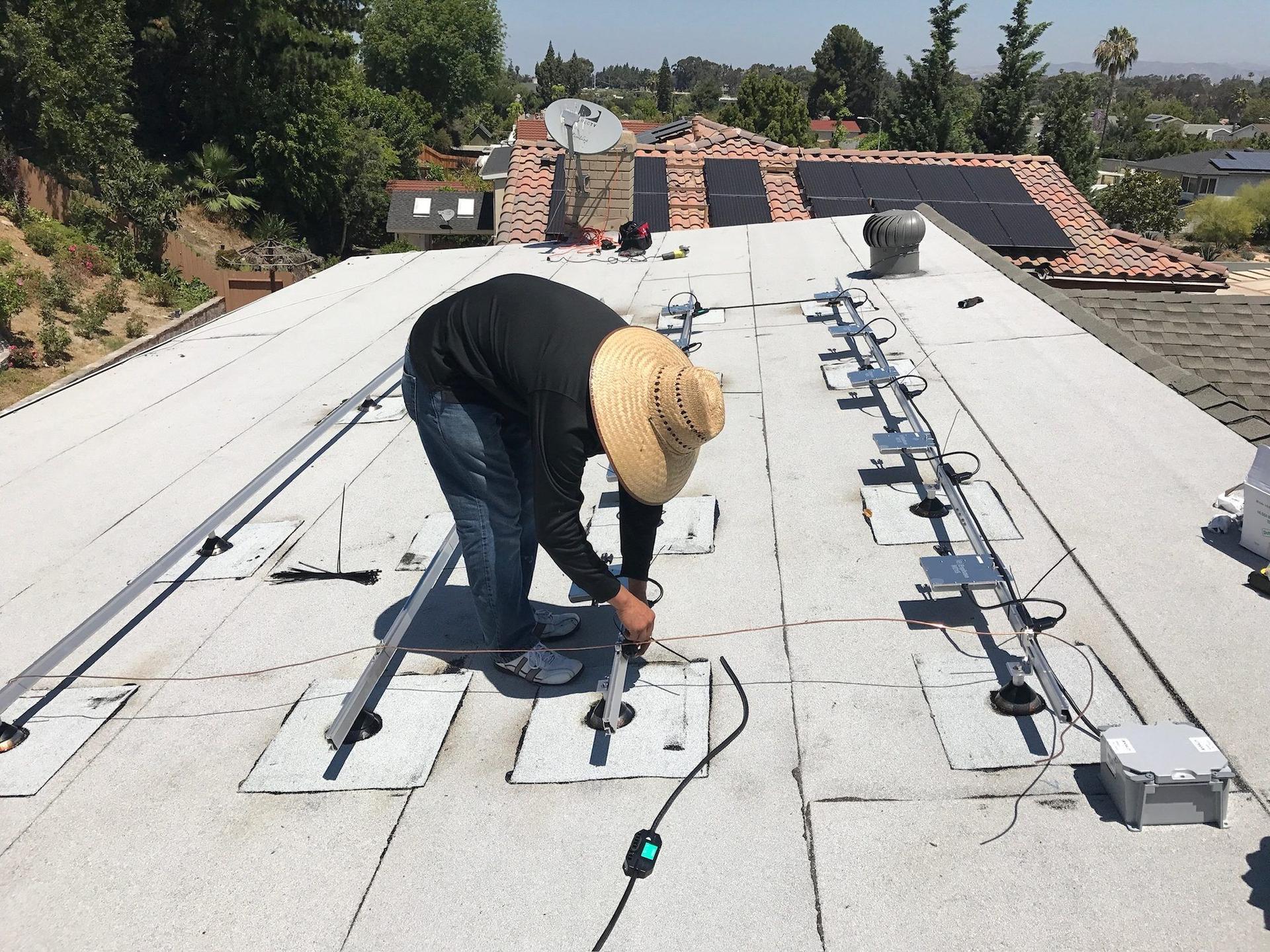
Step 1 — find your usage. Pull a recent utility bill and find the kWh you used, not just the dollar amount. If you only have dollars, divide by your rate: at SCE's published system-average rate of about 34.5¢/kWh (June 2026), a $300 monthly bill is roughly 870 kWh. Step 2 — annualize it. Multiply by 12, ideally averaging a summer and a winter bill so one AC-heavy month doesn't skew the answer; that $300-a-month household lands near 10,400 kWh a year.
Step 3 — convert kWh to system size. In California sun, each kilowatt of solar produces roughly 1,400–1,600 kWh a year (EnergySage puts the state's 'production ratio' around 1.5). So 10,400 kWh ÷ ~1,450 ≈ a 7 kW system. Step 4 — convert kilowatts to panels. Divide by panel wattage: at a mid-range 430 W panel, 7 kW works out to about 17 panels. That's the whole method — everything else is refinement for your roof and rate plan.
Panel counts for common California bills
Here's the method applied to common monthly bills, using SCE's ~34.5¢/kWh average rate, California production of roughly 1,400–1,600 kWh per kW per year, and today's 400–450 W panels. Treat every row as a starting estimate: your utility's rate, your roof, and shading move the answer.
| Monthly bill (≈34.5¢/kWh) | Approx. annual usage | Approx. system size | Approx. panel count |
|---|---|---|---|
| $150 | ≈5,200 kWh | ≈3.5 kW | 8–9 panels |
| $250 | ≈8,700 kWh | ≈5.5–6 kW | 13–15 panels |
| $350 | ≈12,200 kWh | ≈8–8.5 kW | 18–21 panels |
| $500 | ≈17,400 kWh | ≈11–12.5 kW | 26–30 panels |
Estimates for orientation only — computed as bill ÷ rate ÷ California production of ~1,400–1,600 kWh per kW-year ÷ 400–450 W panels. On SDG&E's higher rates the same dollar bill implies less usage (fewer panels); roof orientation and shading set real production. An itemized design is the accurate number.
Why NEM 3.0 changed the 'right' number
Under NEM 3.0, the utility pays very little for solar you export — so the old advice of 'oversize it and sell the surplus' now wastes money. The 2026 design that actually pays covers your real usage and charges a battery for the expensive 4–9 PM peak instead of piling on panels; we cover the mechanics in NEM 3.0 explained and why a battery matters in California. The one good reason to size above today's usage is tomorrow's: an EV or a heat pump can add thousands of kWh a year, and panels are cheapest to install in one visit.
From ballpark to exact: your roof gets the final vote
Usable roof planes, orientation, and shading decide whether the count above fits — and produces as modeled. A south-facing plane earns more per panel than a shaded north one, which is why two identical bills can need different panel counts, and why tools like NREL's PVWatts model production for your exact address rather than a state average. Panel wattage matters too: higher-wattage panels mean fewer of them for the same system size, useful when roof space is tight.
Two fast ways to get your real number: run your bill through our savings calculator for an instant sizing-and-savings sketch, or get a free estimate and we'll design the actual layout from satellite imagery and your last year of usage. Once you have a count, our guides to solar panel cost by system size and what solar costs in California in 2026 cover the dollar side of the math.
FAQ
About 14–24 panels — a 6–10 kW system at the 400–450 W residential panels standard in 2026. The driver is your annual electricity usage: divide your yearly kWh by California production of roughly 1,400–1,600 kWh per kW per year to get system size, then by panel wattage to get the count. Your roof's usable space, orientation, and shading refine the final number.
Roughly 17–21 panels. Using 12,000 kWh a year ÷ California production of ~1,400–1,600 kWh per kW-year gives a 7.5–8.5 kW system; at 400–450 W panels that's about 17–21 of them. A shaded or oddly oriented roof pushes the count up, which is why the accurate answer comes from a design built on your actual roof.
Economically, yes. NEM 3.0 pays very little for exported power, so panels beyond what your home uses (or your battery stores) mostly give energy to the grid at a low credit. The better design right-sizes the array to your usage and pairs it with a battery for the 4–9 PM peak — unless you're sizing ahead for a known addition like an EV or heat pump.
Most residential panels installed in 2026 are rated about 400–450 W. Higher-wattage panels mean fewer panels for the same system size — a 8 kW system is roughly 18–20 panels at 430 W. Wattage is one input; your roof's usable area and sun exposure determine how much of it you can actually use.
Incentives and rates change. This page is kept current — but always confirm specifics for your home.
Get a free, honest estimate →