Inverter faults, monitoring gone dark, production that quietly dropped — we diagnose it with data and fix it. We service the systems we installed and the ones other companies left behind, across Orange County and Southern California.
Repairs on systems installed by another company are diagnosed and quoted per system; we can't honor another installer's workmanship warranty, and manufacturer warranties on existing equipment apply per the manufacturer's terms. We'll tell you what's covered and what isn't before any work begins.
Outcomes first, equipment second
1Your situation
Your system stopped producing, the monitoring went dark, or the company that installed it disappeared.
2What changes
A system that works again, with a written diagnosis before any repair — and a local company that answers the phone afterward.
3How we do it
Any-brand diagnostics and repair by in-house technicians, including systems installed by companies that no longer exist.
Every visit starts with a full diagnostic — production data, inverter faults, wiring, and monitoring — so you know the real problem before paying for parts.
In-house crews, not subs
Solar, roofing, and electrical crews under one CSLB license (#1023627) — the same company diagnoses, quotes, and performs the repair.
Most major brands
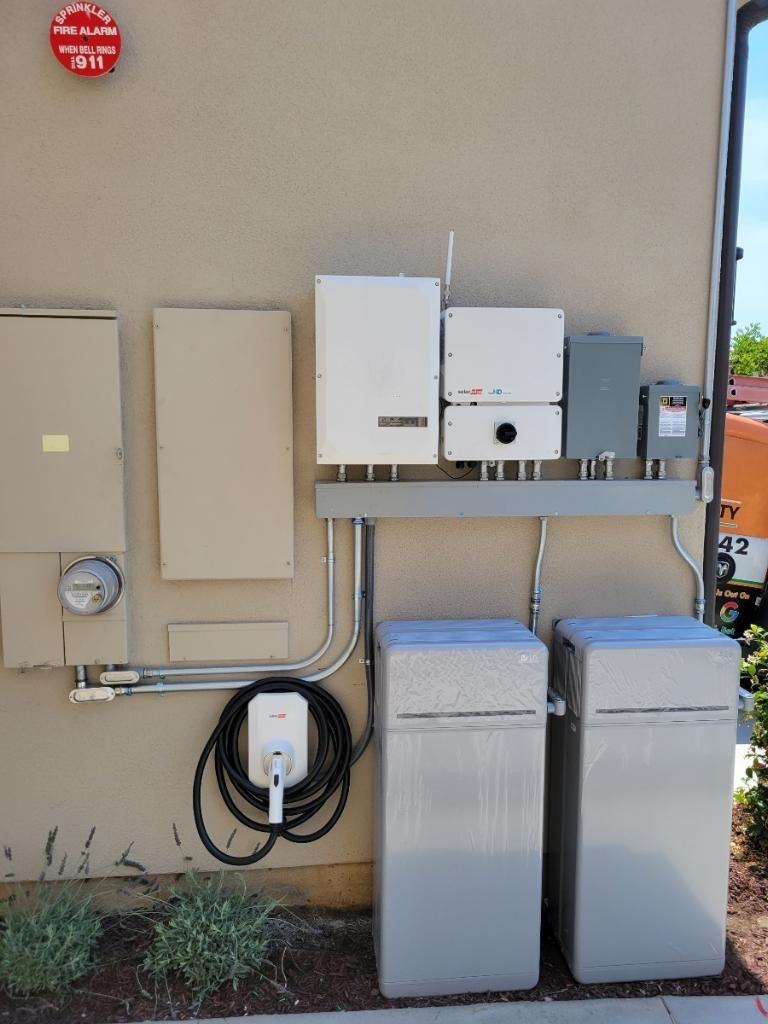
String inverters, microinverters, optimizers, panels, and home batteries from most major manufacturers — including systems we didn't install.
Monitoring back online
We get your gateway and monitoring reporting again, then verify real production — so you can actually see what your system is doing.
Start with the symptom, not a guess
What is your solar system doing right now?
You do not need to diagnose the equipment yourself. Start with what you can see, share the information already available, and confirm the cause before approving parts or repair work.
The system stopped producing
A breaker, inverter fault, grid event, or failed component can interrupt production. Fault history and on-site testing are what separate those causes.
Helpful before the visit: Note when production stopped and any inverter light or error code you can safely see.
The monitoring app shows no data
A reporting connection can go offline while the array is still producing. The diagnostic should verify communications and actual system output before recommending hardware.
Helpful before the visit: Save a screenshot and the name of the monitoring app or gateway.
Production looks lower than expected
Season, shade, soiling, and electronic faults can all change output. A same-month comparison and system data help distinguish normal variation from a repair issue.
Helpful before the visit: Share the same-month production view from this year and last year when it is available.
The original installer is unavailable
The system can still be assessed and serviced. The first step is identifying the installed equipment, the present fault, and any manufacturer coverage that may still apply.
Helpful before the visit: Have the original proposal, equipment list, or warranty documents if you still have them.
What we repair
One service team for the whole system
Solar is more than panels — and so are the failures. Our in-house crews diagnose and repair every part of a home energy system, on most major brands.
Inverters & microinverters
String inverters, microinverters, and optimizers from most major brands — fault codes diagnosed, failed units replaced, and warranty-eligible parts flagged before you pay for them.
Panels & wiring
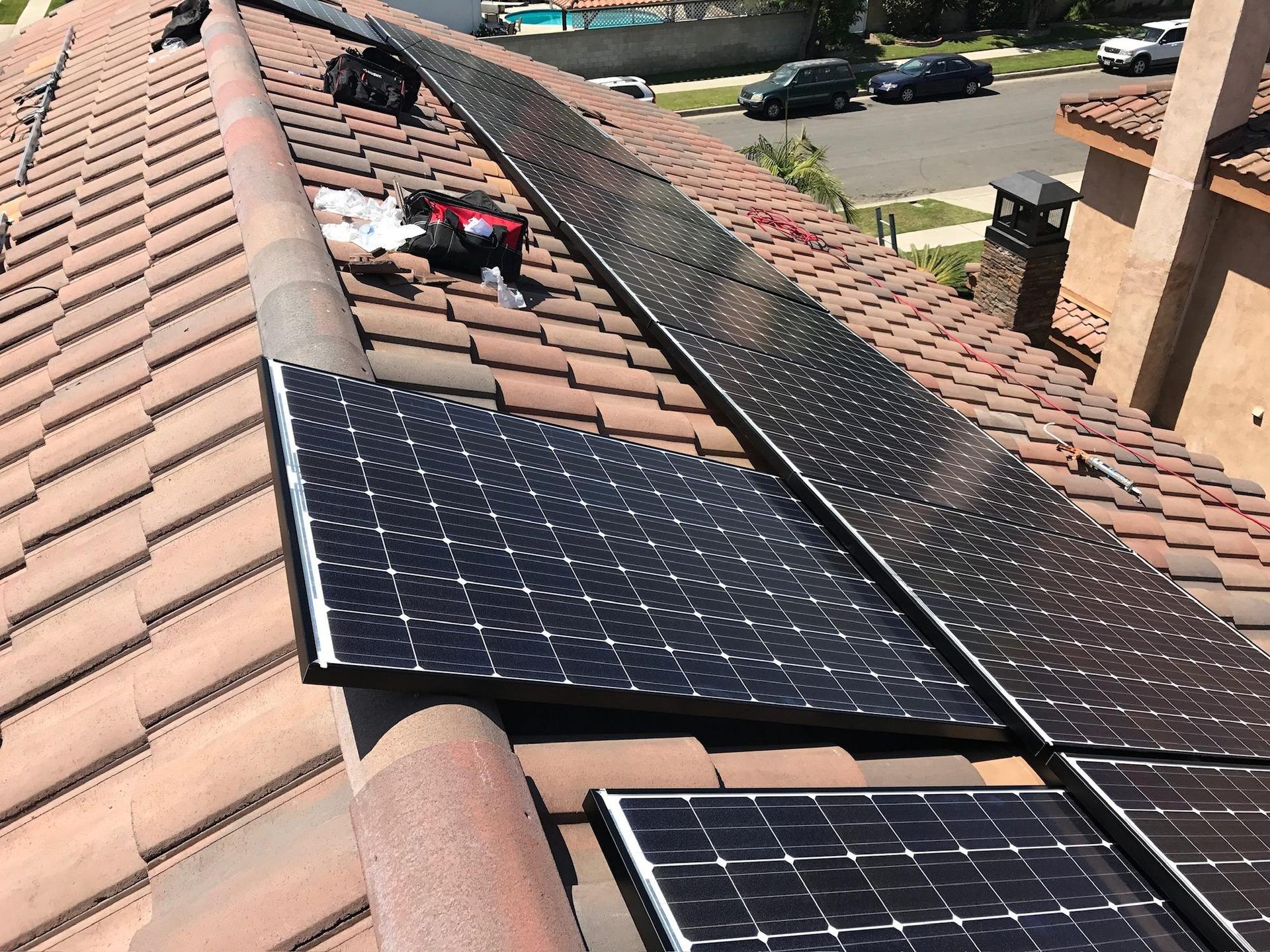
Dead or underperforming panels, failed connectors, damaged conductors, and arc-fault trips — confirmed with production data and on-site testing, then repaired.
Monitoring & communications
Gateways, meters, and apps brought back online. The most common 'broken' system we see is a healthy one that simply stopped reporting.
Batteries & EV chargers
Powerwall and home-battery faults, backup behavior, and charging issues — plus EV charger service — handled in line with each manufacturer's terms.
Critter & pest damage
Chewed wiring and nesting damage under arrays — diagnosed, repaired, and re-secured so the array is safe and producing again.
Roof penetrations & leaks
Leaks around mounts, flashing, and standoffs under the array — found and fixed by our own roofing crews, not a second contractor.
How a service visit works
Diagnose first. Then a quote. Then the repair.
No parts swapped on a hunch, and no work begins before you've approved a written scope.
1
Diagnose
We pull your production data, read inverter faults, and test wiring and connections on site — confirming the actual cause with data, not guesswork.
2
Quote
You get a clear written scope and price before any repair work begins — including which failed parts may still be covered by a manufacturer warranty.
3
Repair & verify
We complete the repair, re-commission the system, bring monitoring back online, and confirm real production before we call the job done.
A real service department
Thousands of service visits completed across Southern California
Repair isn't a side business for us — it's a service department with its own crews, dispatched from our Irvine headquarters. Figures per our company records.
Your solar company went out of business? We take over.
The 2024–2025 industry shakeout was real: SunPower and Titan Solar collapsed in 2024, and Sunnova and Solar Mosaic followed with bankruptcy filings in 2025 — leaving homeowners across Southern California with working hardware and a disconnected phone number. The system on your roof didn't die with the installer. We assess what's installed and what's failing, repair it, re-commission monitoring, and take over as the local company that answers when something breaks. Manufacturer coverage may remain available under the specific warranty terms, registration, eligibility, and claims process — part of our job is telling you what's still covered.
Most 'my solar is broken' calls trace to a short list: a system that didn't wake up after a grid outage, an inverter fault light, monitoring that stopped reporting, or production that's drifted down over months. The honest part: a system showing no data is often still producing — the communications failed, not the array. That's why we confirm the cause with production data and on-site testing before quoting anything, so you never pay to replace hardware that isn't the problem.
No production after an outage — breakers, restart faults, gateway resets
Inverter fault codes and red status lights
Monitoring offline — often comms, not hardware
Gradual production drop-offs — shading, soiling, failed electronics
A large share of the repair calls we take are for systems we didn't install. Whether your original installer vanished, stopped answering the phone, or was never local to begin with, our in-house service team picks up where they left off — from Anaheim, Santa Ana, and Irvine to Huntington Beach, Fullerton, Orange, and Mission Viejo, and across the rest of Southern California. We diagnose first, quote a clear scope, and tell you plainly what we can and can't warranty on another company's work.
Orange County crews — solar, roofing, and electrical in-house
Clear scope and price before any work begins
Honest answers on what's warrantied and what isn't
Different architectures fail in different ways, and knowing the pattern shortens the diagnosis. On Enphase systems, the classic signature is a single microinverter dropping offline — one panel flatlines in per-panel monitoring while the rest keep producing — or an IQ Gateway losing communication, where the system still produces but reporting goes dark. On SolarEdge systems, we more often see optimizer faults pulling down part of an array, or inverter error codes — like isolation faults — that stop production entirely until the cause is found and cleared. Either way, we confirm the failure with data before quoting parts.
Enphase: a single microinverter offline — one panel flatlines, the rest keep producing
Enphase: IQ Gateway / Envoy communication loss — production continues, reporting goes dark
SolarEdge: optimizer faults or pairing issues — part of the array underreports
SolarEdge: inverter error codes (e.g., isolation faults) that halt production until cleared
Panels routinely outlast the roof underneath them. When the roof needs repair or replacement, the array comes off and goes back on — a detach and reset. Because our roofing and solar crews work under one license and one schedule, your panels come down, the roof gets done, and the system is remounted, recommissioned, and verified by the same company — with no gap between trades for a leak to fall into.
Detach, store, re-roof, reset, recommission — one team
Yes. We diagnose and repair systems installed by other companies, including ones whose original installer is no longer in business. We can't honor another company's workmanship warranty, but we'll tell you exactly what's covered and what isn't up front — before any work begins.
We do — taking over orphaned systems is a core part of our service work. Several national companies, including SunPower, Titan Solar, Sunnova, and Solar Mosaic, shut down or filed for bankruptcy in 2024–2025, leaving homeowners with no one to call. The hardware on your roof usually still works, and manufacturer coverage for panels, inverters, and batteries may remain available under each manufacturer's terms, registration, eligibility, and claims process. We assess the system, repair what's failed, re-commission monitoring, and become the local company you call going forward.
Most inverters shut down automatically during an outage (a safety requirement called anti-islanding) and restart on their own once grid power is stable — sometimes after a delay. If your system still isn't producing an hour or so after power returns, check whether the solar breaker tripped and look for a fault light on the inverter. If it won't wake up, call us — a post-outage no-start is one of the most common service calls we run, and it's often a simple fix.
A red or blinking status light means the inverter has logged a fault — common ones include isolation faults, arc faults, grid-voltage errors, and communication failures. The exact meaning differs by brand and model: a SolarEdge error code reads differently than an Enphase microinverter alert. Note the code or light pattern if you can see one, tell us the inverter brand, and we'll diagnose it — we confirm the cause with data and quote any repair before work begins.
Usually not. In most of these calls the system is still producing and only the reporting is down — a gateway that lost its Wi-Fi or cellular connection, a changed router, or a failed communication device. We'll get the gateway and monitoring back online and verify actual production while we're at it. If the data does reveal a real production problem, we'll diagnose that too.
First rule out the normal: production dips in winter and on overcast days, so compare against the same month last year — not last summer. If the drop is real, common causes are a failed microinverter or optimizer (one panel flatlining), an inverter fault, a tripped breaker, new shading from tree growth, heavy soiling, or monitoring that quietly stopped reporting. In Southern California, winter rain handles most panel soiling — if your data shows a gradual decline that recovers after rain, a rinse may be all it needs, and we'll tell you that rather than sell you a repair. Either way, we confirm the cause with your actual production data before recommending any fix.
It depends on the diagnosis — a tripped breaker or offline gateway is a very different job than a failed inverter. We start with a diagnostic, then give you a clear written scope and price before any repair work proceeds, including which failed parts may still be covered by a manufacturer warranty so the quote reflects only what you actually owe.
Sometimes. Manufacturer coverage for panels, inverters, and batteries may remain available after the original installer closes, subject to each manufacturer's terms, registration, eligibility, and claims process. The original installer's workmanship warranty and service obligations may be unavailable. Part of our diagnostic is identifying which failed components are still covered, and we'll tell you what appears warrantable and what isn't before any repair.
Yes. We take on inherited systems regularly — including ones whose original installer no longer exists. We assess what's installed, what's failing, and what it takes to get it producing and monitored again, then give you a clear scope and price before any work. We're honest about what we can and can't warranty on another company's workmanship.
Yes — re-roofing under an array requires a detach and reset: the panels and racking come off, the roof is repaired or replaced, then the array is remounted with new flashing and recommissioned. Because OC Solar runs roofing and solar crews in-house, one team handles the entire sequence under one workmanship warranty, and we quote it per home from a real assessment rather than a per-panel flyer price. See our solar panel removal & reinstallation page for the full process.
Ready to take control of your power bill?Readytotakecontrolofyourpowerbill?
Design it yourself and see modeled pricing online—no sales call required. Eligible Southern California addresses can also book a free site audit. Prefer help? Our local team is available.