

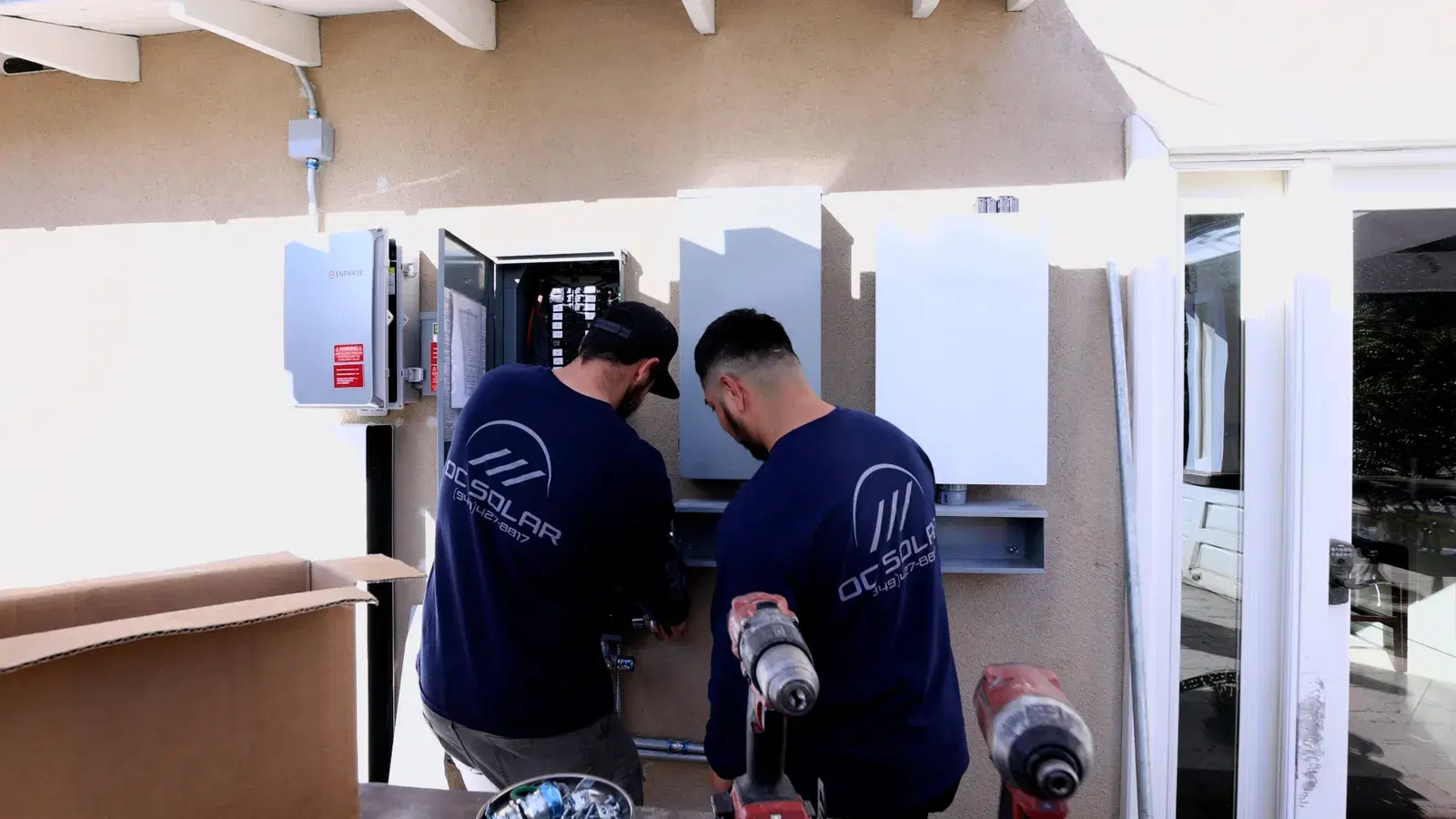
Published November 26, 2025 · Updated September 2, 2026 · 10 min read
The short answer
Yes — you can usually add solar panels to an existing system. Four checks decide it: net-metering status (SCE and PG&E let a NEM 1.0 or 2.0 system grow by the greater of 1 kW or 10 percent of its original size and keep the legacy program; a larger addition is filed under NEM 3.0's Solar Billing Plan), who owns the system (lease and PPA providers must approve changes), inverter and roof headroom, and whether a battery is the better fix. Added panels are priced per watt like new solar — the published California band is $2.50–$3.50 per watt installed — so ask for an itemized quote.
By Vinnie Curcie, Founder & CEO, OC Solar
Short answer: usually yes, with four checks
Yes — in most cases you can add solar panels to an existing system. Four checks decide it: the original ownership contract, utility and net-metering status (SCE and PG&E both let a NEM 1.0 or 2.0 system grow by the greater of 1 kW or 10 percent of its original size without leaving the legacy program), usable roof and electrical capacity, and whether more panels, storage, or a repair best addresses the home's actual problem.
Do not operate added generation until the utility's required interconnection review and permission are complete. The exact process and legacy-rate limits vary by utility and account.
Adding more solar panels to an existing system is one of the most common projects we scope: usage grows — an EV, a heat pump, a pool — and the original array stops covering the bill. Whether you add panels to the existing solar system, add a battery, or do both comes down to the four checks below.
Choose the fix that matches the problem
Start with twelve months of bills and production data. The table is a screening guide, not site-specific engineering or utility approval.
| What you observe | Likely first path | What must be checked |
|---|---|---|
| Annual energy use now exceeds production after an EV, pool, heat pump, or other added load | Evaluate additional solar panels | Utility application, legacy NEM limit, inverter headroom, roof space, main-panel capacity |
| The system exports during the day but the home buys expensive evening power or needs backup | Evaluate battery storage | Load profile, battery and inverter compatibility, backup goals, utility requirements |
| Production fell, alerts appear, or bills rose without a major load change | Diagnose and repair first | Monitoring data, inverter and module health, shading, soiling, wiring, warranty coverage |
| The roof is near replacement or core equipment is obsolete | Plan repair, replacement, or reroofing before expansion | Roof life, detach and reset scope, equipment compatibility, whole-system economics |
A qualified installer and the serving utility must confirm the final design and interconnection path.
Why homeowners outgrow an existing solar system
Solar is usually sized around the home's energy use at installation, but usage rarely stays flat. An EV, electric water heater, heat pump, pool equipment, home addition, or work-from-home schedule can create a real annual production shortfall.
A larger bill does not automatically mean the home needs more panels. First compare utility bills with inverter or monitoring data so a production problem, rate-plan change, or evening-use problem is not mistaken for an undersized array.
Check the utility and net-metering agreement first
Adding generation is an interconnection change. For SCE customers, adding panels requires a revised interconnection application showing the existing and new equipment, followed by a new permission to operate.
SCE states that existing NEM 1.0 or 2.0 customers can remain on their legacy program only when the aggregate expansion stays within the greater of 1 kW or 10 percent of the original system size and the request is submitted through the correct expansion process. Larger changes can move the account to the current Solar Billing Plan. Other utilities have their own rules, so confirm the serving utility's current requirements before design.
PG&E publishes the same threshold — up to 10 percent or 1 kW, whichever is greater — and says legacy status above it is not assured, so read our NEM 3.0 explainer before sizing a larger addition.
Decision table: NEM status, inverter headroom, roof space, and ownership
Screen an expansion with this table before paying for a site visit: green, proceed to design; yellow, design around the constraint; red, another path comes first.
| Check | Green: proceed | Yellow: design around it | Red: another path first |
|---|---|---|---|
| NEM 1.0 or 2.0 status (SCE, PG&E) | Addition within the greater of 1 kW or 10 percent of the original size, filed as an expansion; legacy program kept | Larger addition: SCE requires a new Solar Billing Plan application and transitions the account; PG&E says legacy status is not assured. Expect NEM 3.0 export credits on the added capacity | A large addition that only pencils with NEM 2.0 export credits: take the battery path |
| Inverter headroom | Spare DC input, or microinverters added per panel | At its limit: add a second inverter or a hybrid such as Powerwall 3 (built-in inverter, up to 20 kW DC of solar) | Obsolete or failing inverter with no matching parts: repair or replace first |
| Roof space and condition | Unshaded south- or west-facing plane with room | Only shaded or north-facing area left: lower output per added panel | Roof near replacement: reroof, then reinstall and expand in one mobilization |
| Ownership | Owned outright | Loan or active warranty: confirm the lender and manufacturer allow third-party work | Lease or PPA: the provider must approve or perform any change |
Threshold as published by SCE (Solar Billing Plan FAQs) and PG&E (NEM2 Sunset FAQ): the greater of 1 kW or 10 percent of the original system size; SDG&E customers should confirm SDG&E's current form. The utility and a licensed installer make the final call, and main-panel capacity is checked at design.
Review ownership, lease, and PPA restrictions
An owned system is generally simpler to modify. A lease, power-purchase agreement, equipment loan, or active warranty can restrict third-party work or require approval from the system owner or provider.
Locate the original agreement and confirm who owns each component before an installer changes the array, inverter, monitoring, or battery equipment.
Confirm roof, inverter, and electrical capacity
An expansion needs productive roof area and electrical headroom. A central inverter may already be near its allowed input, while a microinverter system may be easier to extend but still needs compatible equipment, branch-circuit capacity, and a utility-approved design.
The installer should also check the main service panel, backup configuration, rapid-shutdown equipment, roof condition, shading, and whether matching replacement modules are available.
When a battery is the better secondary path
A battery does not create additional energy. It can be the better fit when the existing array produces enough over the year but the home exports power during the day and imports it during expensive evening hours, or when outage backup is the priority.
The CPUC explains that storage can shift solar production into later, higher-value hours, while the U.S. Department of Energy identifies storage as an alternative to replacing an existing rooftop system when evening use or outage resilience is the goal.
If Powerwall 3 is under consideration, compare it with other compatible battery storage options after the installer verifies the existing inverter, electrical service, backup design, wall space, utility paperwork, and local permitting.
Retrofitting a Powerwall to existing solar is one of the most common installs we do — our Tesla Powerwall installer page covers exactly what a retrofit includes, from the site review through utility interconnection.
What it costs to add panels versus a battery
Added panels are priced like new solar — per watt installed. The published California band for residential solar in 2026 is about $2.50–$3.50 per watt before financing; an addition uses the same framework, but design, permit, inspection, and the revised interconnection application are spread over fewer panels, so judge a 2 kW addition (roughly five 400 W panels) on its itemized total, not a per-watt headline. See our California solar cost guide and financing options.
A battery follows different math: it adds no production, but under NEM 3.0 it moves daytime solar into the 4–9 PM peak that SCE prices highest, and a Powerwall 3 brings its own inverter, which can solve an inverter-headroom problem at the same time. There is no sticker price for an installed Powerwall 3 — unit count, backup scope, and panel condition set it — so we itemize it; our Tesla Powerwall 3 cost guide explains each line. Savings are projections, not guarantees; the federal §25D residential credit does not apply to 2026 installs.
What an expansion assessment should produce
A useful assessment should document the existing system and agreement, twelve months of usage and production, the serving utility and rate plan, roof and electrical constraints, and side-by-side panel, battery, and repair paths.
OC Solar can review the existing system and provide an itemized recommendation without changing the current URL or forcing a one-size-fits-all Powerwall answer.
FAQ
Usually, yes. The installer confirms four things: net-metering status (SCE and PG&E let a NEM 1.0 or 2.0 system grow by the greater of 1 kW or 10 percent of its original size without leaving the legacy program), the ownership contract, inverter and main-panel headroom, and usable roof space. Larger additions are filed under the Solar Billing Plan and earn NEM 3.0 export credits.
Four steps: a site and data review (twelve months of bills, monitoring data, roof condition, inverter headroom, main-panel capacity); design and a city building permit; a revised interconnection application with SCE, SDG&E, or PG&E showing existing and new equipment, filed as an expansion when the addition is within the greater of 1 kW or 10 percent of the original size; then inspection and a new permission to operate.
It can. For SCE, a NEM 1.0 or 2.0 customer keeps the legacy program only when the aggregate expansion is within the greater of 1 kW or 10 percent of the original system size and is filed as an expansion; above that, SCE requires a new Solar Billing Plan application and transitions the account. PG&E publishes the same threshold. Confirm with your utility before changing equipment.
Start with twelve months of bills and production data. Add panels when annual production is genuinely short after an EV, heat pump, or pool and the utility, roof, inverter, and electrical system allow it. Choose a battery when the array covers your yearly use but you export at midday and buy back SCE's 4–9 PM peak power, or want outage backup. Savings estimates are projections.
Per watt, like new solar. The published California band for residential solar in 2026 is about $2.50–$3.50 per watt installed before financing; an addition uses the same framework, but permit, design, inspection, and interconnection costs spread across fewer panels, so judge it on the itemized total. Savings are projections, and the federal §25D residential credit does not apply to 2026 installs.
Many existing systems can be evaluated for a Powerwall 3 retrofit, but compatibility is site-specific. Powerwall 3 stores 13.5 kWh, delivers 11.5 kW continuous, and its built-in inverter accepts up to 20 kW DC of solar, so it can replace an inverter that is out of headroom. The installer verifies the existing inverter, electrical service, backup design, wall space, utility rules, and permitting first.
Yes, if production has fallen, the monitoring system shows alerts, or bills increased without a major load change. Diagnose inverter, module, wiring, shading, soiling, and warranty issues before paying for additional capacity.
Yes. An expansion is new scope of work, so it needs its own building permit, city inspection, and an updated interconnection application with your utility — and on NEM 1.0 or 2.0 systems, how the paperwork is filed can affect your grandfathered status, so it has to be done carefully. A good installer handles all of it; OC Solar does on every expansion.
Sources
- 1.SCE solar and net-energy-metering FAQs — Southern California Edison · accessed 2026-07-28
- 2.CPUC net energy metering and net billing guidance — California Public Utilities Commission · accessed 2026-07-28
- 3.Should I replace my rooftop solar system? — U.S. Department of Energy · accessed 2026-07-28
- 4.FAQs about the Solar Billing Plan (system expansion threshold) — Southern California Edison · accessed 2026-09-02
- 5.Net Energy Metering 2 (NEM2) Sunset — Contractor FAQ — Pacific Gas and Electric · accessed 2026-09-02
- 6.Powerwall 3 Datasheet — Tesla · accessed 2026-09-02
- 7.Time-of-Use residential rate plans — Southern California Edison · accessed 2026-09-02
We'll review the existing system, utility agreement, roof, and electrical constraints—then compare expansion and storage paths for your home.
Evaluate my existing system →