Published June 6, 2026 · Updated September 2, 2026 · 9 min read
The short answer
Updated September 2026. California solar is priced per watt, so cost scales with system size. As rough 2026 estimates before financing or battery, expect a 4 kW system around $10,000–$14,000, 5 kW around $12,500–$17,500, 6 kW around $15,000–$21,000, 8 kW around $20,000–$28,000, 10 kW around $25,000–$35,000, 12 kW around $30,000–$42,000, and 13 kW around $32,000–$45,000 — ranges, not quotes.
By Vinnie Curcie, Founder & CEO, OC Solar
Why size drives the price (it's per-watt)
California installers price solar by system size in watts (W) or kilowatts (kW), at a price per watt. So a bigger array costs more in near-linear fashion: double the kilowatts and you're roughly doubling the panel and labor cost. The per-watt figure for residential solar in California commonly lands somewhere around $2.50–$3.50 before financing, which is the number we use to sketch the size tiers below.
Treat everything here as an estimate, not a quote. Per-watt pricing varies with equipment tier, roof type, and electrical scope, and none of these tiers include battery storage — which under NEM 3.0 you'll almost always want. The only accurate number is an itemized proposal built from your roof and usage. Shopping in OC? See our county-level breakdown of solar panel cost in Orange County, built on cited local market data.
Solar system cost by size in California (2026)
The table below runs the arithmetic for the six system sizes California homeowners ask about most, from 4 kW to 12 kW. Every dollar figure is simply system watts multiplied by the $2.50–$3.50 per-watt range (so 10 kW × $2.50–$3.50 = $25,000–$35,000), before battery storage and before financing. Panel counts assume today's common 400–440 W residential modules. The usage column is the monthly consumption a system of that size roughly offsets in Southern California — about 1,400–1,600 kWh per kW per year on a reasonably sunny, south- or west-facing roof — and it is meant to be read against your own bill: the average California home uses about 503 kWh a month, so most homes sit in the 4–8 kW band, and 10–12 kW is high-usage territory (central AC running hard, a pool pump, an EV charging at home).
Two caveats before you anchor on a row. First, these are estimates, not quotes — equipment tier, roof type, and electrical scope move any individual price, which is why we itemize every proposal. Second, the battery column matters more than it looks: under NEM 3.0, exported solar earns very little, so from about 8 kW up nearly every economically sound design pairs the array with storage, and that adds to the all-in figure shown here. Savings are projections, not guarantees.
| System size (DC) | Panels (400–440 W) | Installed cost at $2.50–$3.50/W | Typical monthly usage fit | Battery pairing under NEM 3.0 |
|---|---|---|---|---|
| 4 kW | 9–10 panels | $10,000–$14,000 | ~470–530 kWh/mo (near the 503 kWh CA average) | Optional — depends on evening usage |
| 5 kW | 11–13 panels | $12,500–$17,500 | ~580–670 kWh/mo | Optional — often added |
| 6 kW | 14–15 panels | $15,000–$21,000 | ~700–800 kWh/mo | Usually |
| 8 kW | 18–20 panels | $20,000–$28,000 | ~930–1,070 kWh/mo | Yes — typical |
| 10 kW | 23–25 panels | $25,000–$35,000 | ~1,170–1,330 kWh/mo | Yes — typical |
| 12 kW | 27–30 panels | $30,000–$42,000 | ~1,400–1,600 kWh/mo | Yes — typical (often two units) |
Method: installed cost = system watts × $2.50–$3.50 per watt (the range used across OC Solar's 2026 California cost guides; DOE benchmarks and marketplace data, September 2026). Panels = system watts ÷ 400–440 W, rounded to whole panels. Monthly usage fit = kW × 1,400–1,600 kWh per kW per year ÷ 12, a typical Southern California yield per NREL PVWatts; 503 kWh/mo is the average California residential usage (EIA, 2024). Estimates, not quotes; production and savings are projections that depend on your roof, shade, utility, and rate plan.
6 kW: smaller homes and modest usage
A 6 kW system suits smaller homes, lower electricity usage, or roofs with limited usable space. At a rough $2.50–$3.50 per watt, that's an estimated $15,000–$21,000 before financing and before any battery. It's enough to offset a meaningful share of a modest bill, but under NEM 3.0 the savings still hinge on pairing it with storage so you use your own power in the evening rather than exporting it for a low credit.
8 kW and 10 kW: the typical range
Most California single-family homes land in the 8–10 kW range. An 8 kW system runs an estimated $20,000–$28,000 before financing; a 10 kW system roughly $25,000–$35,000 (broken out in its own section below). These sizes cover the usage of a typical home with central AC and normal appliance loads, and they're the band where a properly sized battery does the most work — banking midday production for the expensive 4–9 PM peak.
Bigger isn't automatically better. Under NEM 3.0, oversizing the array to export surplus power earns very little, so the smarter design covers your usage and charges a battery rather than piling on panels you'll mostly give away to the grid.
How much does a 10 kW solar system cost in California?
A 10 kW solar system costs an estimated $25,000–$35,000 installed in California in 2026, before battery storage and before financing — that is 10,000 watts at the $2.50–$3.50 per-watt range used throughout this guide. At today's common 400–440 W modules, 10 kW is about 23–25 panels and needs roughly 450–550 square feet of usable, well-oriented roof. It is the size most often quoted for larger single-family homes with central air conditioning, a pool pump, or an EV charging at home — not for an average-usage home.
Production is what makes a 10 kW system a fit or a miss. In Southern California a 10 kW array typically produces about 14,000–16,000 kWh a year — roughly 1,170–1,330 kWh/mo — under NREL PVWatts-type assumptions for a sunny south- or west-facing roof, which is about two and a half times the 503 kWh a month the average California home uses. Under NEM 3.0 that surplus is worth very little exported, so a 10 kW design almost always pairs with a battery — typically one 13.5–15 kWh unit, two for whole-home backup or heavy EV charging — which raises the all-in price above the panel-only figure. Payback depends on your utility, rate plan, and how much of that production you use at home; see our California solar payback period guide for the by-utility math. Savings and production figures are projections, not guarantees.
What moves a 10 kW quote inside the range: a tile or multi-plane roof pushes toward the top; a simple composition-shingle roof with a clean south face sits toward the bottom. Ten kilowatts also raises the odds of electrical work — a main-panel upgrade or a sub-panel for backup circuits — and any storage is priced as its own line. On financing, the federal §25D residential credit expired December 31, 2025, so a purchased 10 kW system does not receive it; the financing section below covers the cash, loan, and $0-down lease/PPA paths, and our California solar cost guide puts the 10 kW number in statewide context.
13 kW: larger homes, EVs, and heavy loads
A 13 kW system fits larger homes, all-electric households, or homes with EV charging and heavy air conditioning. At a rough per-watt rate, that's an estimated $32,000–$45,000 before financing and before storage. At this size, electrical work — a main-panel upgrade or sub-panel for backup loads — becomes more likely, which is part of why larger systems can carry a slightly different per-watt math than the small tiers.
What moves your number within a tier
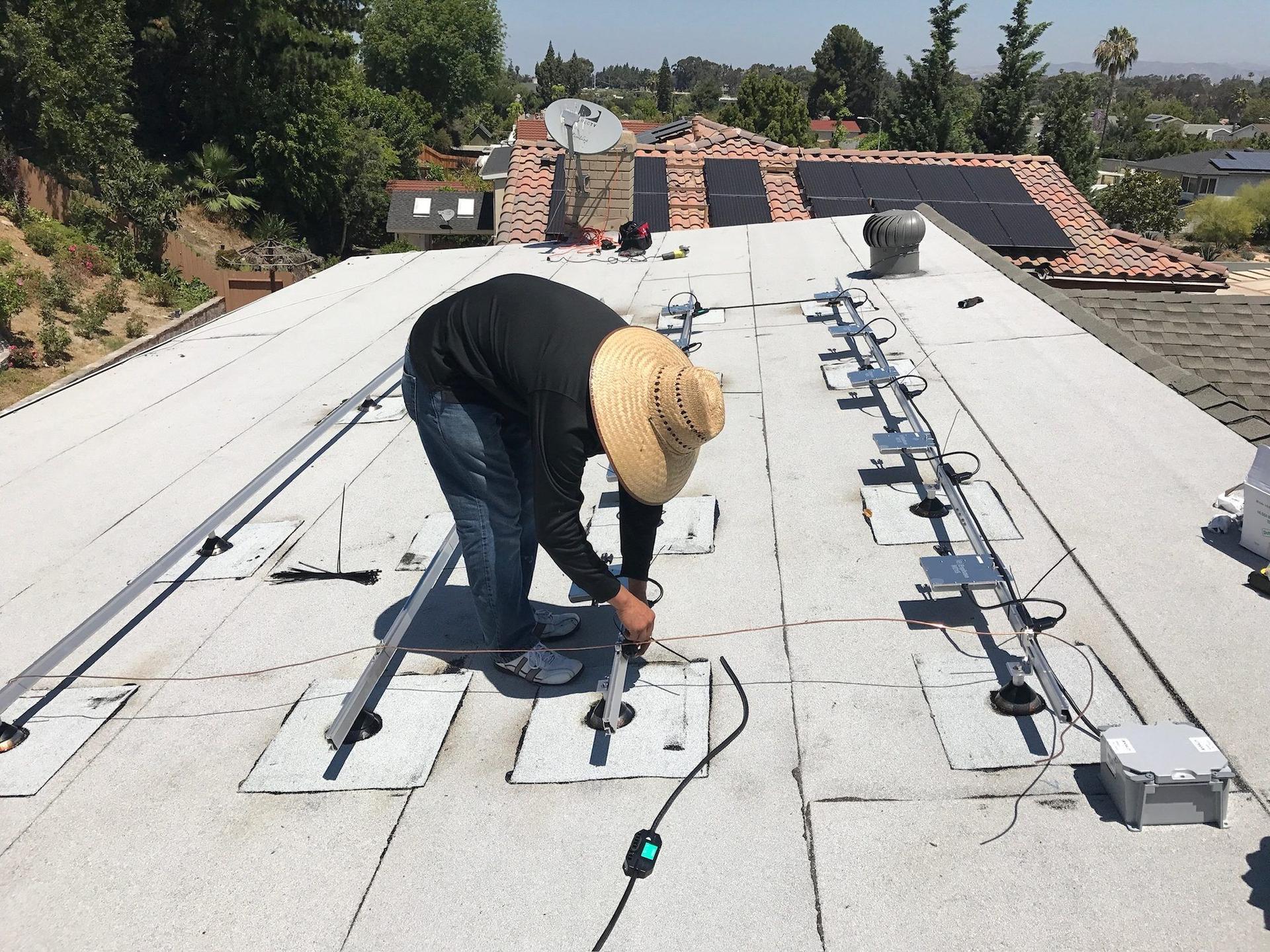
Two homes at the same kilowatts can land at different totals. The biggest swing factors are panel and inverter tier, whether you add battery storage (and how much), roof complexity — tile is more labor than composition shingle, and multi-plane or steep roofs cost more — and electrical upgrades like a panel swap. Because NEM 3.0 makes a battery essential for most homeowners, the realistic 'all-in' figure is higher than these panel-only tiers suggest, which is exactly why we itemize storage separately so you can see each piece.
How financing changes your out-of-pocket
These tiers describe the system price, not what you pay up front. Pay cash and you own the system outright with the fastest payback. Take a solar loan and you spread the purchase over time — but note the federal §25D residential tax credit that used to offset 30% of a cash or loan purchase expired December 31, 2025, so loan buyers no longer receive it. Or choose a $0-down lease or PPA, where the financing company owns the system, claims the commercial §48E credit through roughly 2027, and passes that value to you as a lower monthly payment — so your out-of-pocket at signing can be nothing regardless of which size tier you're in.
FAQ
As a rough estimate, an 8 kW system runs about $20,000–$28,000 before financing and before a battery, based on a roughly $2.50–$3.50 per-watt range. It's an estimate, not a quote — equipment tier, roof type, and electrical work all move the number, so an itemized proposal is the only accurate figure.
California solar is priced per watt, so a larger array means more panels and labor and a near-linear increase in cost. That's why doubling the kilowatts roughly doubles the panel-and-labor portion of the price.
No. The 6/8/10/13 kW estimates here are panel-and-install only. Under NEM 3.0 most homeowners should add battery storage, which raises the all-in cost — we quote the battery as a separate itemized line so you can see exactly what it adds.
Not if you have high usage, an all-electric home, EV charging, or heavy AC. But under NEM 3.0, oversizing just to export power earns very little, so the right size covers your usage and charges a battery rather than maximizing panel count.
About $25,000–$35,000 installed in California in 2026, before battery storage and before financing — 10,000 watts at the roughly $2.50–$3.50 per-watt range for residential solar. That is about 23–25 panels at 400–440 W each, producing an estimated 14,000–16,000 kWh a year in Southern California — enough for a high-usage home with central AC, a pool, or an EV. Under NEM 3.0 a system this size almost always pairs with a battery, which adds to the all-in cost. Treat it as an estimate, not a quote; production and savings are projections.
Square footage is a weak predictor — your monthly kWh sets the size. A 2,000-square-foot California home using around the state average of 503 kWh a month typically needs a 4–5 kW system, about 9–13 panels at 400–440 W each, or an estimated $10,000–$17,500 before battery and financing. The same house with central AC running all summer, a pool pump, or an EV charging at home often uses 700–1,100 kWh a month and lands at 6–8 kW — about 14–20 panels, or $15,000–$28,000. Roof space is rarely the limit on a 2,000-square-foot home; usage and shade are. These are projections — pull the kWh from your SCE, SDG&E, or PG&E bill and an itemized proposal sizes it from there.
Sources
- 1.IRS — Residential Clean Energy Credit (Section 25D) — Internal Revenue Service · accessed 2026-07
- 2.IRS — FAQs on OBBB Modifications to Sections 25C, 25D, 25E, 30C, 30D, 45L, 45W, and 179D (Public Law 119-21) — Internal Revenue Service · accessed 2026-07
- 3.IRS — Clean Electricity Investment Credit (Section 48E) — Internal Revenue Service · accessed 2026-07
- 4.CPUC — Net Energy Metering and Net Billing — California Public Utilities Commission · accessed 2026-07
- 5.U.S. Department of Energy — Solar Photovoltaic System Cost Benchmarks — U.S. Department of Energy (Solar Energy Technologies Office) · accessed 2026-07
- 6.CSLB — Check a License — Contractors State License Board (California) · accessed 2026-07
- 7.NREL — PVWatts Calculator (solar production estimates by location) — National Renewable Energy Laboratory · accessed 2026-09
- 8.EIA — Electricity sales, revenue, and average price data (2024) — U.S. Energy Information Administration · accessed 2026-09
Incentives and rates change. This page is kept current — but always confirm specifics for your home.
Get a free, honest estimate →