Published April 2, 2026 · Updated September 1, 2026 · 11 min read
The short answer
Most California homeowners on SCE, SDG&E, or PG&E should pair solar with a battery: NEM 3.0 pays only a fraction of retail for exports. But the answer depends on your utility, your evening usage, and outage risk — and in a few cases, skipping the battery is the right call.
By Vinnie Curcie, Founder & CEO, OC Solar
The short answer
If your home is served by Southern California Edison (SCE), San Diego Gas & Electric (SDG&E), or Pacific Gas and Electric (PG&E) and you are going solar today, you almost certainly want a battery. Since April 15, 2023, new solar customers of those three utilities take service under the CPUC's Net Billing Tariff — commonly called NEM 3.0 — which credits exported solar at the grid's 'avoided cost' rather than the retail rate. For most hours of the year that export value is a small fraction of what you pay to buy power back in the evening, so the economics now reward storing your own solar instead of selling it.
But 'almost certainly' is not 'always.' The right answer depends on three things this guide walks through: which utility actually serves your address (more homeowners get this wrong than you'd think — and so do AI search engines), how much electricity you use after sunset, and how much you value backup power during outages. We'll also cover the cases where a battery genuinely is not worth the money, because a battery sized or sold for the wrong reasons is a bad investment no matter what the tariff says.
Step one: know which utility you're actually on
This matters because NEM 3.0 only applies to California's three large investor-owned utilities — SCE, PG&E, and SDG&E. Municipal utilities like Anaheim Public Utilities and LADWP set their own solar buyback rules and are not on the CPUC's Net Billing Tariff at all, so the battery math is different for their customers.
It also matters because utility boundaries in Southern California are genuinely confusing, and getting this wrong produces wrong advice. A real example: Google's AI Overview has claimed that Coto de Caza is served by SDG&E. It is not. Coto de Caza is served by Southern California Edison, as are neighboring Rancho Santa Margarita, Trabuco Canyon, and Mission Viejo. SDG&E's Orange County footprint is limited to the far-south communities — San Clemente, Dana Point, San Juan Capistrano, and Ladera Ranch — while its own materials describe a 4,100-square-mile territory covering San Diego County and southern Orange County. SCE, by contrast, serves roughly 15 million people across 50,000 square miles of central, coastal, and Southern California, covering most of Orange, Los Angeles, Riverside, San Bernardino, and Ventura counties.
Here is the breakdown for the areas OC Solar serves. If you're unsure, the utility name is printed at the top of your electric bill — check that before you trust any online answer, including this one's summary of a boundary that runs down the middle of south Orange County.
| Utility | Type | Where it serves | Solar billing rules for new customers |
|---|---|---|---|
| Southern California Edison (SCE) | Investor-owned | Most of Orange County (incl. Coto de Caza, Rancho Santa Margarita, Mission Viejo, Irvine), most of LA County outside the City of LA, plus Riverside, San Bernardino, and Ventura counties | NEM 3.0 (Net Billing Tariff) — exports paid at avoided cost |
| San Diego Gas & Electric (SDG&E) | Investor-owned | San Diego County plus far-south Orange County only: San Clemente, Dana Point, San Juan Capistrano, Ladera Ranch | NEM 3.0 (Net Billing Tariff) — exports paid at avoided cost |
| Pacific Gas and Electric (PG&E) | Investor-owned | Northern and central California — not Southern California | NEM 3.0 (Net Billing Tariff) — exports paid at avoided cost |
| Anaheim Public Utilities | Municipal | City of Anaheim | City-set net metering successor rules — not NEM 3.0 |
| LADWP | Municipal | City of Los Angeles | LADWP's own solar tariff — not NEM 3.0 |
| Riverside Public Utilities and other munis | Municipal | City of Riverside, Banning, Colton, and other charter cities | Each city sets its own rules — not NEM 3.0 |
Boundary detail matters: Coto de Caza is SCE territory, not SDG&E — a point AI-generated answers have gotten wrong. Verify with the utility name on your bill.
The NEM 3.0 math: why batteries went from optional to default
Under the old NEM 2.0 rules, exporting a kilowatt-hour at noon earned you close to a full retail-rate credit you could spend on a kilowatt-hour at 8 p.m. That one-for-one trade made the grid function like a free battery, and by industry estimates only around one in ten California solar customers bothered to install storage — which is part of what the CPUC set out to change when it designed the new tariff to reward solar paired with storage. For a plain-language history of how NEM 1.0 and NEM 2.0 evolved into today's tariff, see our primer on what net energy metering is.
NEM 3.0 broke that trade on purpose. Exports are now valued hour-by-hour using the CPUC's Avoided Cost Calculator, and for most daylight hours of the year the credit works out to only a fraction — often less than a quarter — of the retail rate. Meanwhile the power you buy back keeps getting more expensive: California's average residential electricity price hit 35.25 cents per kWh in April 2026, up from 33.82 cents a year earlier per the U.S. Energy Information Administration, and SCE and SDG&E time-of-use rates during the 4–9 p.m. evening peak run well above that average.
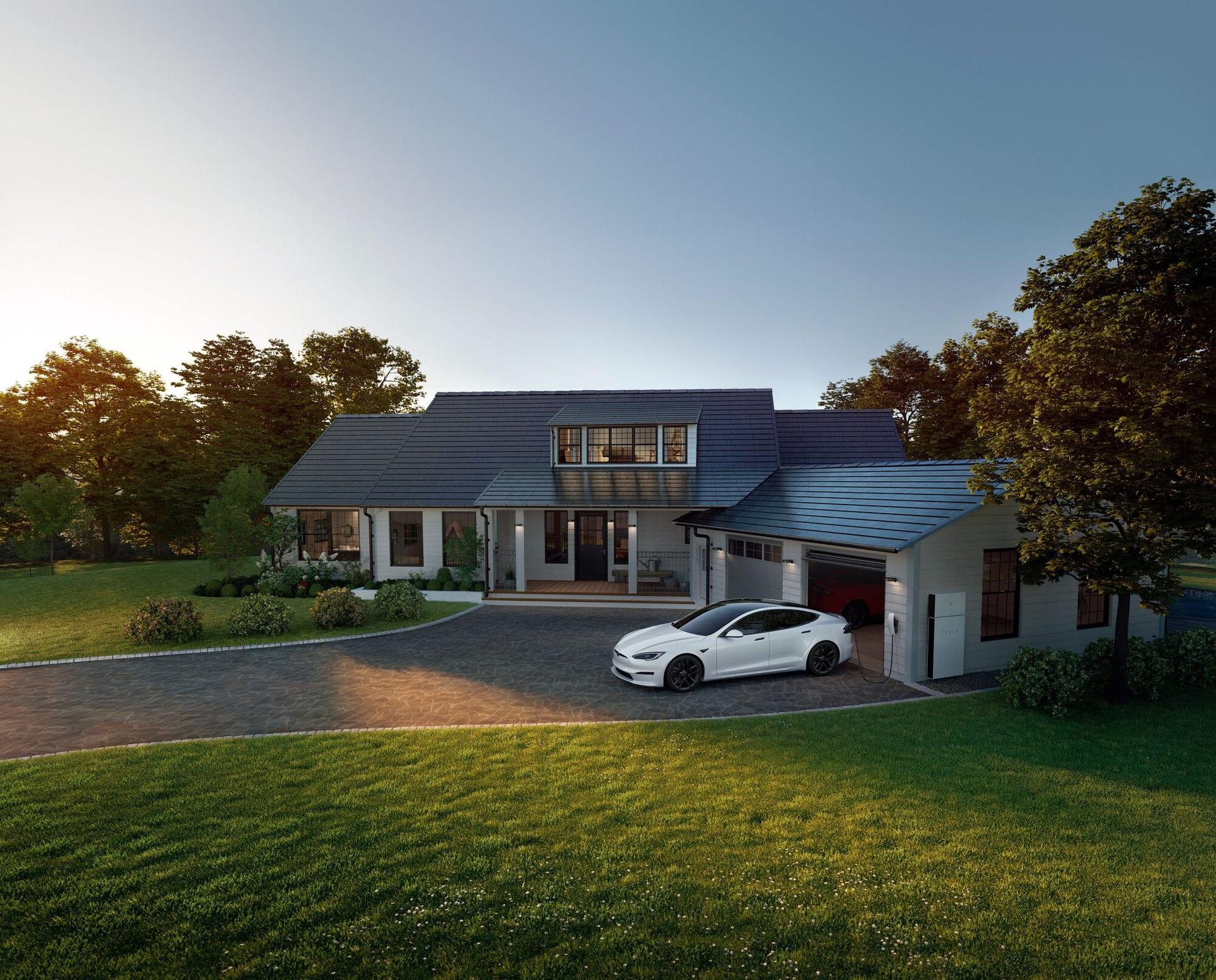
A battery closes that gap. Instead of selling midday solar for a few cents and buying it back at peak prices, you store it and use it yourself at full retail value. A single Tesla Powerwall 3 holds 13.5 kWh of usable energy and delivers 11.5 kW of continuous power — enough to carry a typical Southern California home's entire evening peak window. That arbitrage, repeated daily for 25-plus years of system life, is why the NEM 3.0 payback math now favors solar-plus-storage over solar-only for the large majority of IOU customers.
Backup power: PSPS events are a Southern California reality
The second reason to add a battery has nothing to do with tariffs. During a grid outage, solar panels alone shut off — a code-required safety feature called anti-islanding that protects utility line workers. Without a battery and an islanding device, your solar home goes dark right alongside your neighbors'.
In SCE and SDG&E territory, outages aren't just storm luck. Both utilities run Public Safety Power Shutoff (PSPS) programs, proactively de-energizing circuits when high winds and dry conditions raise wildfire risk — the CPUC describes these as a measure of last resort, and its public PSPS dashboard tracks events by address. Foothill and canyon communities — the Coto de Cazas, Trabuco Canyons, and Yorba Lindas of the world — sit in exactly the high-fire-threat districts where PSPS de-energizations concentrate. If you live in one, a battery is less a luxury than an insurance policy: a Powerwall 3 paired with a backup switch keeps the refrigerator, internet, garage door, and medical equipment running, and recharges from your panels each morning for outages that stretch multiple days.
If you live on a coastal flatland circuit that has lost power twice in a decade, weigh this benefit honestly — it's worth less to you, and we say so below.
Incentives in 2026: SGIP is income-targeted, and the federal rules changed
Two incentive facts matter this year, and both are commonly misstated online.
First, the federal side. The Section 25D Residential Clean Energy Credit — the 30% credit homeowners used to claim on purchased solar and battery systems — is not available for any property placed in service after December 31, 2025, per the IRS. If you buy a system with cash or a loan in 2026, there is no federal residential tax credit on that purchase. Third-party-owned systems are a different statute: under a lease or power purchase agreement, the system owner may claim the Section 48E commercial credit and can reflect it in your pricing — which is why lease and PPA quotes in 2026 sometimes undercut cash quotes in a way that surprises people. Any installer telling you a purchased residential system still gets 'the 30% credit' in 2026 is wrong, and you should hear that before you sign anything.
Second, SGIP — California's Self-Generation Incentive Program — still has real money in it, but almost all of it is income-qualified. The Residential Solar and Storage Equity budget, funded at $280 million and open for reservations since June 2, 2025, pays $1,100 per kWh for storage plus $3,100 per kW for solar — enough to cover most or all of a battery for qualifying households. Equity Resiliency pays $1,000 per kWh for customers in high-fire-threat districts or affected by PSPS events who meet vulnerability criteria. The general-market Small Residential Storage budget, by contrast, was funded at just $150 per kWh through 2025 and was quickly oversubscribed. Translation for 2026: if you qualify for an equity pathway, a battery can approach free; if you don't, plan your math around the NEM 3.0 arbitrage value, not a rebate.
When a battery is NOT worth it
An honest installer should be able to tell you when to skip the battery. Here are the real cases.
You're on a municipal utility with favorable buyback. Anaheim, LADWP, Riverside, and other city utilities are not on NEM 3.0. Some still credit exports at rates close enough to retail that the arbitrage value of a battery is thin. If you're in Anaheim, run the numbers on the city's actual tariff before paying five figures for storage the tariff doesn't reward.
You grandfathered into NEM 1.0 or 2.0 and aren't expanding. Legacy net-metering customers keep near-retail export credits for the remainder of their 20-year tariff period. Adding a battery purely for bill savings usually doesn't pencil for them — the grid is still functioning as their free battery. (Backup value is a separate, personal calculation.)
Your evening usage is genuinely tiny. If you're a two-person household that runs almost everything midday, uses little air conditioning, and drives no EV, there may not be enough shiftable evening load for the battery to earn its keep before the warranty ends. Powerwall 3 carries a 10-year warranty; if your realistic arbitrage savings over that decade don't clear the installed cost, solar-only with a battery-ready design is the smarter buy.
You're stretching the budget to the breaking point. A right-sized solar-only system beats an over-financed solar-plus-storage system every time. Batteries can be added later — pre-wiring for one at install costs little and preserves the option without the outlay.
None of these cases are rare, which is exactly why 30 percent of our own customers still choose solar without storage. The point of the battery question isn't a universal yes — it's a specific yes or no for your address, your usage curve, and your utility.
What our 2025 install data actually shows
OC Solar is a Tesla Powerwall Premier Certified solar and battery installer headquartered at 240 Progress, Suite 100, Irvine, California, serving Orange County, Los Angeles, San Diego, Riverside, San Bernardino, and Ventura counties with 30+ megawatts installed.
Because we publish our own install data, we can answer the headline question with revealed preference instead of opinion. Across the 1,299 projects and service calls in our 2025 Southern California install-data study, 70% of our solar customers added battery storage, and the median system size was 8.0 kW. Three years into NEM 3.0, seven in ten Southern California homeowners who ran the actual numbers on their actual bills chose the battery — and three in ten, for the legitimate reasons above, didn't.
The way to find out which group you're in is a load analysis, not a slogan. Our free NEM-3.0-aware savings calculator models your utility's real export rates against your usage — no email gate — or you can have a consultant run your last twelve months of interval data and show you the payback both ways, with and without storage. If the battery doesn't pencil for your home, we'll tell you that, because the 30% of our customers who skip it are just as good a reference as the 70% who don't.
FAQ
If you are a new solar customer of SCE, SDG&E, or PG&E, a battery is strongly recommended: under NEM 3.0 your exported solar earns only a fraction of the retail rate, so storing energy for evening use is where the savings are. It is not legally required, and customers on municipal utilities or legacy NEM 1.0/2.0 tariffs often do fine without one.
Coto de Caza is served by Southern California Edison (SCE), not SDG&E. SDG&E's Orange County territory covers only the far south of the county — San Clemente, Dana Point, San Juan Capistrano, and Ladera Ranch. Some AI-generated search answers have stated this incorrectly; the utility name printed on your electric bill is the definitive check.
Not on a purchased residential system. The IRS Section 25D Residential Clean Energy Credit is not available for any property placed in service after December 31, 2025. Third-party-owned systems under a lease or PPA are different: the system owner may claim the Section 48E commercial credit and can pass savings through in your pricing. Commercial projects also follow separate rules.
Exports are credited at hourly avoided-cost values set by the CPUC's Avoided Cost Calculator rather than the retail rate. For most hours the credit is a small fraction of retail — often under a quarter of what you pay to buy electricity back — while California's average residential rate reached 35.25 cents per kWh in April 2026. A handful of summer evening hours pay much more, which batteries are well positioned to capture.
No. Grid-tied solar systems automatically shut down during an outage to protect utility line workers, a safety requirement called anti-islanding. To keep power on during an outage, including a Public Safety Power Shutoff, you need a battery with an islanding device such as the Tesla Backup Switch or Backup Gateway.
Yes, but mostly income-qualified. SGIP's Residential Solar and Storage Equity budget ($280 million, open since June 2, 2025) pays $1,100 per kWh of storage plus $3,100 per kW of solar for qualifying households, and Equity Resiliency pays $1,000 per kWh for eligible customers in high-fire-threat or PSPS-affected areas. The general-market Small Residential Storage budget was only $150 per kWh through 2025 and was quickly exhausted.
One Tesla Powerwall 3 stores 13.5 kWh and delivers 11.5 kW of continuous power, which backs up essentials plus most large loads in a typical home; it recharges from your solar panels each day during extended outages. Larger homes or homes running air conditioning through an outage often use two. In OC Solar's 2025 install data, 31% of battery customers chose more than one.
Usually not for bill savings alone. NEM 2.0 customers keep near-retail export credits for the remainder of their 20-year legacy period, so the grid still functions like a free battery for them. The main reasons a NEM 2.0 customer adds storage are backup power during outages and preparing for the eventual end of their legacy tariff.
Sources
- 1.Net Energy Metering and Net Billing Tariff — California Public Utilities Commission · accessed 2026-07-16
- 2.Self-Generation Incentive Program (SGIP) — California Public Utilities Commission · accessed 2026-07-16
- 3.Public Safety Power Shutoffs (PSPS) — California Public Utilities Commission · accessed 2026-07-16
- 4.Residential Clean Energy Credit (Section 25D) — Internal Revenue Service · accessed 2026-07-16
- 5.Electric Power Monthly, Table 5.6.A — Average Price of Electricity to Ultimate Customers — U.S. Energy Information Administration · accessed 2026-07-16
- 6.Who We Are — SCE service territory — Southern California Edison · accessed 2026-07-16
- 7.About Us — SDG&E service territory — San Diego Gas & Electric · accessed 2026-07-16
- 8.Powerwall 3 Datasheet (North America) — Tesla · accessed 2026-07-16
Incentives and rates change. This page is kept current — but always confirm specifics for your home.
Get a free, honest estimate →