Published August 11, 2026 · Updated September 4, 2026 · 12 min read
The short answer
California's SGIP battery rebates remain available through limited Residential Solar and Storage Equity (RSSE) AB209 pathways, subject to income eligibility and your program administrator's funding status. As of September 4, 2026, most AB209 pools are waitlisted, while the SCE- and PG&E-administered pools for qualifying publicly owned utility customers are open. Legacy general-market and Equity Resiliency budgets are closed to new applications, so confirm your exact pathway and reservation before counting a rebate in your battery price.
By Vinnie Curcie, Founder & CEO, OC Solar · Reviewed by Ashton Curcie, Chief Operating Officer
Is the SGIP battery rebate still available in 2026?
California's SGIP battery rebates remain available through limited Residential Solar and Storage Equity (RSSE) AB209 pathways, subject to income eligibility and your program administrator's funding status. As of September 4, 2026, most AB209 pools are waitlisted, while the SCE- and PG&E-administered pools for qualifying publicly owned utility customers are open. Legacy general-market and Equity Resiliency budgets are closed to new applications, so confirm your exact pathway and reservation before counting a rebate in your battery price.
The distinction is between a program's published incentive rate and a budget that can accept your application today. RSSE offers $1,100 per kWh of storage and $3.10 per watt for eligible paired solar, subject to system sizing and project-cost limits. A household must first qualify for RSSE and be assigned to the correct administrator and budget; a medical condition or fire-zone address alone does not qualify for this low-income program.
This guide separates the current September 4 budget status from the legacy Equity Resiliency rules that still matter to previously reserved projects. If you are earlier in your battery research, start with our home battery backup guide; for installed-price context, compare the system examples in our California battery cost guide.
SGIP rebate amounts per kWh in 2026
Published rates explain how incentives are calculated; application status determines whether you can pursue one now. The current residential opportunity is RSSE AB209, while the older rates below help explain existing reservations and older quotes.
Do not treat a listed rate as an available discount. Confirm eligibility, the correct budget, and a written reservation before making a purchase decision that depends on SGIP.
| Budget category | Published rate | New-application status |
|---|---|---|
| Small Residential Storage (legacy general market) | $150/kWh at Step 7 | Closed; not a new 2026 rebate pathway |
| Legacy residential Equity | $850/kWh historical rate | Legacy category; do not confuse with current RSSE funding |
| Equity Resiliency | $1,000/kWh | Closed to new applications; existing reservations follow their program rules |
| RSSE Ratepayer | $1,100/kWh storage | Closed to new applications |
| RSSE AB209 | $1,100/kWh storage + $3.10/W eligible paired solar | Open or waitlisted by administrator and POU/Non-POU pool; see the status table below |
Sources: official SGIP metrics, CPUC RSSE fact sheet, and CSE incentive page, accessed September 4, 2026. Amounts are subject to eligible system sizing, project costs, and program limits. A published rate is not a reservation or a guaranteed payment.
How SGIP works and who runs it
The Self-Generation Incentive Program is a California Public Utilities Commission program supporting eligible battery storage and, in RSSE, paired solar. Program administrators include PG&E, Southern California Edison, SoCalGas, the Center for Sustainable Energy for SDG&E territory, and LADWP for its assigned AB209 customers. Your electric and gas service, customer type, and budget pathway determine the administrator; the money is not one unrestricted statewide pool.
SGIP commits funds through project reservations. An application, a waitlist position, a confirmed reservation, and an incentive payment are different milestones. We help assemble the utility bill, equipment details, eligibility documents, and application for the administrator to review; the administrator decides whether the project qualifies and can receive funding.
Qualifying standalone storage can participate; eligible paired solar has a separate RSSE incentive rate. Incentives use eligible capacity and project-cost rules, so multiplying your entire proposed array size by $3.10 per watt is not a final rebate calculation. We verify those limits before including any incentive in your plan.
SGIP budget by utility: what the dashboard shows
As of September 4, 2026, the official dashboard lists Small Residential Storage, Equity Resiliency, and RSSE Ratepayer as closed. RSSE AB209 is waitlisted for CSE, SoCalGas, and LADWP; the SCE- and PG&E-administered AB209 Non-POU pools are also waitlisted. Their separate AB209 POU pools are open for qualifying publicly owned utility customers assigned to those administrators. The POU label is not an open rebate for all SCE or PG&E electric customers.
POU means publicly owned utility. An SCE-administered POU allocation can fund qualifying customers of an assigned municipal utility; it does not mean every home buying electricity from SCE is eligible for that open pool. Confirm the administrator assigned to your address and the exact budget name.
The dashboard can show a positive available-funds balance alongside Closed or Waitlist. That balance is not permission to submit a new application or a promise your place in a queue will be funded. The status and the administrator's written rules control.
| Budget | Administrator(s) | Dashboard status | What to check |
|---|---|---|---|
| Small Residential Storage, Equity Resiliency, RSSE Ratepayer | CSE, SCE, SoCalGas, PG&E | Closed | Legacy reservations only; no assumption of a new waitlist |
| RSSE AB209 | CSE, SoCalGas, LADWP | Waitlist | Household eligibility and current queue acceptance |
| RSSE AB209 Non-POU | SCE, PG&E | Waitlist | Correct non-POU assignment and current queue acceptance |
| RSSE AB209 POU | SCE, PG&E | Open | Qualifying publicly owned utility customer assigned to this pool |
Source: selfgenca.com official program metrics, September 4, 2026. Status changes as applications and budgets change. Blank dashboard entries are not open budgets. Check current administrator instructions before applying; a waitlist is not a confirmed reservation.
Open, waitlisted, and closed are different
Open means the listed budget is accepting applications under its rules, subject to remaining funds and eligibility. Waitlist means an eligible application can queue where the administrator permits it, without a guaranteed incentive or timing. Closed does not automatically mean a new waitlist is available: legacy ratepayer application deadlines passed in 2025.
CSE currently states that new applications are limited to RSSE AB209, with funding reserved and new eligible applications waitlisted in received order. Cancellations may free funding, but that does not establish a reliable payment date. Follow the deadlines and requirements in your actual reservation letter; ask about applicable demand-response requirements and any low-income exemptions.
We check whether your pathway accepts an application before preparing one. If the project is waitlisted, compare the battery's cost and value without an assumed rebate. Our California solar incentives guide covers the other programs to review alongside SGIP.
SGIP rebate math: what your battery would get
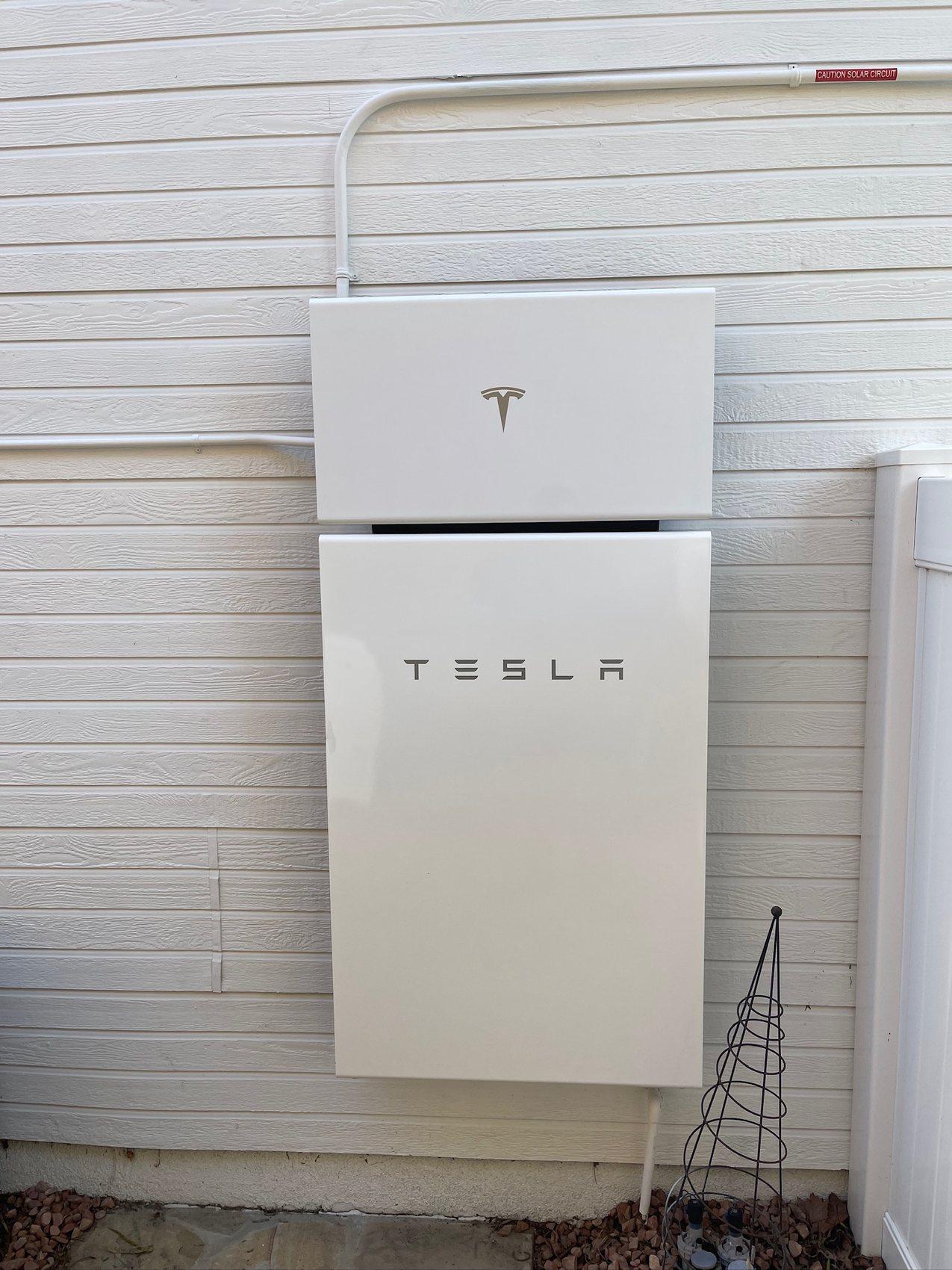
When a pathway does come through, the amounts are substantial — these are not token rebates. Here is the arithmetic at the handbook rates for three leading residential battery platforms in the California market, using the installed price ranges published in our Powerwall 3 vs. Enphase vs. FranklinWH comparison.
These are illustrative rate-times-capacity calculations, not approved incentives. Program administrators apply equipment eligibility, incentive-duration reductions where applicable, capacity rules, and eligible-cost caps. The legacy Equity and Equity Resiliency columns explain older reservations; they are not open 2026 offers.
For scale context from our own install base: Tesla Powerwall accounts for 95.4% of our completed battery installs, and 84.8% of battery projects use a single unit (OC Solar project data, as-of 2026-08-11) — so the one-Powerwall row is the arithmetic most Southern California households would actually see. The FranklinWH figures are market analysis for comparison shoppers; it is not a platform we install.
| Battery (usable capacity) | Published installed range | Equity ($850/kWh) | Equity Resiliency ($1,000/kWh) | RSSE ($1,100/kWh) |
|---|---|---|---|---|
| Tesla Powerwall 3 (13.5 kWh) | $15,500-$18,500 | $11,475 | $13,500 | $14,850 |
| Enphase IQ Battery 10C (10 kWh) | $13,000-$17,000 | $8,500 | $10,000 | $11,000 |
| FranklinWH aPower 2 (15 kWh) | $15,000-$19,000 | $12,750 | $15,000 | $16,500 |
Illustrative arithmetic only: handbook rate multiplied by usable capacity, before program caps — SGIP cannot pay more than a project's eligible costs, and final amounts are set at reservation. Installed ranges are the market figures published in our platform comparison guide, before incentives.
RSSE and Equity Resiliency have different eligibility rules
RSSE serves qualifying low-income households. The CPUC lists single-family income at or below 80% of Area Median Income; eligible CARE, FERA, or ESA participation; qualifying SASH or DAC-SASH participation or reservations; and specified low-income multifamily or MASH/SOMAH pathways. Fire-zone residence or medical equipment alone is not an RSSE eligibility pathway.
Legacy Equity Resiliency uses a different two-part test: a qualifying fire-zone address or PSPS history AND a household pathway such as medical baseline, serious illness, qualifying housing, an affordable-solar reservation, or an income-qualified electric well pump. The medical and serious-illness routes have no income test. The legacy budget is closed to new applications, so do not confuse eligibility under that matrix with an available new RSSE rebate. Our SGIP Equity & Resiliency eligibility guide explains the distinction.
| Pathway | Eligibility basis | Current-use distinction |
|---|---|---|
| Legacy Equity | Qualifying low-income housing and associated documentation | Historical residential category; not a new blanket CARE/FERA offer |
| Equity Resiliency | Fire-zone or PSPS criterion AND a qualifying household pathway; medical routes do not require low income | Legacy budget closed to new applications |
| RSSE AB209 | Eligible low-income, assistance-program, or qualifying affordable-housing pathway described by CPUC | Check the separate administrator and POU/Non-POU pool for Open or Waitlist status |
Sources: CPUC RSSE fact sheet and official Equity Resiliency residential matrix. These summaries do not replace administrator review. CARE/FERA can be an RSSE pathway under its rules; it is not a standalone pathway on the legacy Equity Resiliency matrix.
How to apply for SGIP (and who actually files it)
Start by confirming your utility, program administrator, eligibility pathway, and current budget status. We can help prepare your utility bill, system design, cost documentation, and household eligibility evidence for the application. If approved funding is available, the administrator issues a reservation; after installation, inspection, interconnection, and required claim documentation, the administrator reviews the incentive claim.
Your reservation letter and program rules set the project's deadlines and payment conditions. Confirm who receives the incentive and how it is credited in your agreement. Most new SGIP projects have demand-response obligations, but some low-income RSSE customers qualify for an exemption; the administrator should confirm which rules apply to your project.
Before signing a quote that includes a rebate, ask: Which budget is this, is it open or waitlisted, and has my reservation been confirmed? Those answers are more useful than a general statement that SGIP money is available.
SCE vs. SDG&E vs. PG&E vs. LADWP: utility variations
For SCE electric customers, SCE currently reports its ratepayer budgets closed and its state-funded RSSE budget waitlisted. CSE reports new applications in SDG&E territory limited to the waitlisted RSSE AB209 budget. PG&E customers should check the Non-POU pool when that is their assignment, rather than mistaking the separately listed POU allocation for general availability.
LADWP now administers an AB209 allocation, which the September 4 dashboard marks Waitlist. Other publicly owned utility customers can have different administrator assignments. Check both electric and gas service when identifying the correct administrator; SoCalGas is also a program administrator, so electric service alone does not settle every eligibility question.
The process is specific to your address, budget, and existing solar agreement. We verify those details before recommending solar, a standalone battery, or an addition to an existing system, and before estimating any incentive benefit.
If SGIP doesn't come through: what pays for a battery in 2026
A battery can still provide value through backup and using more of your own solar. For new solar on the SCE, SDG&E, or PG&E Solar Billing Plan, storing daytime production can reduce purchases during expensive evening hours. Your actual rate, usage, installation price, and system design determine the savings; municipal utility programs differ. Our time-of-use rates guide explains the rate differences, and our savings calculator helps you compare your own bill.
A battery configured for backup can support selected home loads during an outage, within its power and energy limits; our battery runtime calculator provides a planning estimate. The IRS says the federal residential clean energy credit is unavailable for property placed in service after December 31, 2025. Lease and PPA terms depend on the provider and contract; compare the total offer without treating a financier's tax benefit as your personal credit. Our California solar incentives guide explains the distinctions.
OC Solar has installed solar, battery, and electrical work across Orange County and Southern California since 2016 — 30+ MW installed, with completed projects in 232 California cities (OC Solar project data, as-of 2026-08-11), a 4.8-star Google rating, and CSLB #1023627 — and we are one of just 12 installers on Tesla's Powerwall Pro Council. We check SGIP eligibility against current program rules as part of every battery design: we confirm both household eligibility and current application availability before preparing a submission. Start with a free battery estimate, or see the platforms we install on our battery storage page.
FAQ
Yes, through limited RSSE AB209 pathways for eligible households, subject to current funding. As of September 4, 2026, most AB209 pools are waitlisted, while SCE- and PG&E-administered POU pools are open for qualifying publicly owned utility customers assigned to them. Legacy general-market and Equity Resiliency budgets are closed to new applications. Check your exact budget and obtain a written reservation before counting the rebate.
RSSE AB209 lists $1,100 per kWh of eligible storage and $3.10 per watt of eligible paired solar. Older published rates include $150 per kWh for Small Residential Storage, $850 per kWh for legacy residential Equity, and $1,000 per kWh for Equity Resiliency, but those legacy categories are not new open 2026 offers. Capacity, project-cost, and other program limits determine the approved incentive.
RSSE serves qualifying low-income households. The CPUC lists single-family income at or below 80% of Area Median Income; eligible CARE, FERA, or ESA participation; qualifying SASH or DAC-SASH participation or reservations; and specified low-income multifamily or MASH/SOMAH pathways. Fire-zone residence or medical equipment alone is not an RSSE eligibility pathway. Eligibility does not guarantee funding: your assigned AB209 budget must accept your application, and a waitlist is not a reservation.
There is no guaranteed wait. An eligible application can join a waitlist only where the administrator currently accepts it. Funding may become available through cancellations, but legacy Closed budgets do not automatically accept new applications. CSE's current RSSE AB209 notice says its waitlist is processed in received order as cancelled projects free funds.
The IRS states that the federal Residential Clean Energy Credit is not available for property placed in service after December 31, 2025. A battery installed in 2026 therefore does not qualify for that homeowner credit. A lease or PPA is a separate ownership and financing arrangement; any benefit to the provider depends on its eligibility and your contract, and is not a tax credit you claim.
Qualifying standalone storage can receive an SGIP incentive; solar panels are not universally required. RSSE can also support eligible paired solar at its separate solar rate. Household eligibility, budget availability, capacity limits, and project-cost rules still apply, so confirm your exact proposed configuration with the administrator.
Sometimes, through the building rather than the tenant. SGIP's equity budgets have always included qualifying affordable-housing properties, where the owner installs storage and residents benefit, and the CPUC describes the Residential Solar and Storage Equity pathway as open to low-income residential customers, including in LADWP territory. A single-family renter needs the property owner to authorize and participate in the project — the application runs on the site, the installer, and the utility account.
Sources
- 1.CPUC — Self-Generation Incentive Program (SGIP) — California Public Utilities Commission · accessed 2026-08
- 2.CPUC — Participating in the Self-Generation Incentive Program — California Public Utilities Commission · accessed 2026-08
- 3.IRS — Residential Clean Energy Credit (Section 25D) — Internal Revenue Service · accessed 2026-08
- 4.SCE — Time-of-Use residential rate plans — Southern California Edison · accessed 2026-08
- 5.CPUC — RSSE eligibility and rates fact sheet — California Public Utilities Commission · accessed 2026-09-04
- 6.SGIP — official current budget status — SGIP Program Administrators · accessed 2026-09-04
- 7.SGIP — legacy Equity Resiliency residential matrix — SGIP Program Administrators · accessed 2026-09-04
- 8.SCE — current SGIP application and participation rules — Southern California Edison · accessed 2026-09-04
- 9.CSE — current incentive rates and RSSE waitlist notice — Center for Sustainable Energy · accessed 2026-09-04
Rebates change and budgets close — we verify what is actually claimable for your address against current SGIP rules, and price the battery honestly either way.
Check my eligibility & real savings →