
Published January 14, 2026 · Updated October 15, 2026 · 10 min read
The short answer
Four solar incentives are genuinely live in California in 2026: SGIP's income-qualified Residential Solar and Storage Equity budget ($280 million authorized, posted rates of $1,100 per kWh for storage and $3,100 per kW for paired solar, waitlisted where territory funds are fully reserved), the permanent property-tax exclusion for systems qualifying before January 1, 2027, the roughly 30% Section 48E value that financiers pass through on lease, PPA, and prepaid plans, and the NEM 3.0-plus-TOU rate structure that pays a solar-plus-battery system every evening. Gone: the 30% federal Residential Clean Energy Credit (Section 25D), which expired December 31, 2025 for purchased home systems. There is no California state solar income-tax credit — and never has been.
By Vinnie Curcie, Founder & CEO, OC Solar
What solar incentives are left in California in 2026?
Four solar incentives are genuinely live in California in 2026, and one big one is gone. Still live: SGIP's income-qualified Residential Solar and Storage Equity battery budget; the state's permanent property-tax exclusion for systems that qualify before January 1, 2027; the roughly 30% federal value that survives on lease, PPA, and prepaid plans through the commercial Section 48E credit the financier claims; and — the one nobody markets but everyone gets — the rate structure itself, where NEM 3.0 and 4–9 PM time-of-use pricing pay a solar-plus-battery system every single evening. Gone: the 30% federal Residential Clean Energy Credit (Section 25D), which expired December 31, 2025 for purchased home systems.
The table below is the scannable version, and each section of this guide covers one line of it. For the expiration rules in filing-level detail — the install-date trigger, carryforward, and what the IRS actually says — see our 30% solar tax credit in 2026 guide.
| Incentive | 2026 status | Who it applies to |
|---|---|---|
| Federal residential credit (Section 25D, 30%) | EXPIRED for systems placed in service after Dec 31, 2025 | No one buying with cash or a loan in 2026 |
| Section 48E pass-through (~30% of federal value) | Live on a closing clock — new-start systems must be in service by Dec 31, 2027 | Lease, PPA, and prepaid customers — as pricing, not a tax credit |
| SGIP — Residential Solar and Storage Equity budget | Accepting applications: $280M authorized; waitlisted where territory funds are fully reserved (SDG&E as of 12/31/2025) | Income-qualified residential customers statewide, including LADWP as applications open |
| SGIP — general-market budgets (Equity Resiliency, Small Residential Storage) | Funded through 2025; largely closed for new 2026 reservations | Check current budget status before counting on anything |
| Property-tax exclusion (SB 710) | Permanent for systems qualifying before Jan 1, 2027 | Every California homeowner adding solar |
| California state solar income-tax credit | Does not exist and never has | No one — a persistent internet myth |
| NEM 3.0 + TOU rate arbitrage | Live every day, no application needed | Solar-plus-battery homes on SCE, SDG&E, and PG&E |
Program statuses verified against CPUC and IRS pages, August 2026. Incentive availability changes; confirm eligibility for your household and utility before building a purchase decision on any line above.
The 30% federal tax credit for buyers is gone
The One Big Beautiful Bill terminated the federal Residential Clean Energy Credit (IRC §25D) for systems placed in service after December 31, 2025. If you buy a system with cash or a loan in 2026, there is no longer a 30% federal tax credit. Any company still advertising one to homeowners is out of date — and that should make you question what else they're not keeping current.
Where the 30% value went: $0-down lease and PPA
The credit didn't fully disappear — it migrated. On third-party-owned systems (leases, PPAs, and prepaid plans), the financing company owns the system and claims the commercial §48E credit, then passes the value to you as a lower payment. That federal benefit is now on a hard clock: the law's construction-start window closed July 4, 2026, so new-start systems must be placed in service by December 31, 2027 to qualify. It is a price benefit baked into your financing — not a tax credit you file for. Our no-credit-check prepaid solar plan is built on exactly this mechanism, and our financing page compares it against a loan and cash side by side.
Is there a California solar tax credit in 2026?
No — and this is one of the most-searched misconceptions. California has never offered a state solar income-tax credit, in 2026 or before. The state's incentives take other forms: the permanent property-tax exclusion described below, NEM 3.0 net-billing rules that reward battery pairing, and certain utility or local programs. If a company implies a 'California solar tax credit' will offset your purchase, ask them to show it to you in writing — they can't.
Can I still get the solar tax credit in California?
Only indirectly. If you buy a system with cash or a loan, no — the federal residential credit (§25D) expired December 31, 2025, and there is no state credit to replace it. But if you go solar on a lease, PPA, or prepaid plan, the financing company claims the commercial §48E credit and passes roughly 30% of federal value through as a lower price, through about 2027. You file nothing and need no tax liability — the benefit arrives as a better price, not a refund. For the mechanics, see our guide comparing a solar PPA vs prepaid vs cash in California.
SGIP in 2026: mostly closed, with one real income-qualified pathway left
California's general-market SGIP battery budgets — the rebates most sales pitches still mean by 'SGIP' — were funded through 2025 and are largely closed to new reservations. What genuinely remains is the income-qualified Residential Solar and Storage Equity budget: $280 million authorized by the CPUC, with posted rates of $1,100 per kWh for battery storage and $3,100 per kW for paired solar. Funds are already fully reserved in some territories — SDG&E's as of December 31, 2025, where new applications join a waitlist — and, notably, the budget reaches beyond the big three investor-owned utilities, with LADWP applications opening for City of Los Angeles households.
Budget status, application steps, and waitlist mechanics live in our SGIP battery rebate guide, and if you think your household may be income-qualified, start with who qualifies for SGIP's equity tiers. Our rule either way: we check your eligibility against current program rules and put the result in writing — we never build your price on a rebate you may not get.
California's property-tax exclusion (lock it in before 2027)
California excludes the added home value from solar from your property taxes — and SB 710 made that exclusion permanent for systems that qualify before January 1, 2027. In plain terms: add solar without raising your property tax bill, locked in until you sell. This is a real, time-sensitive reason to act in 2026.
The real 2026 math: NEM 3.0 + a battery
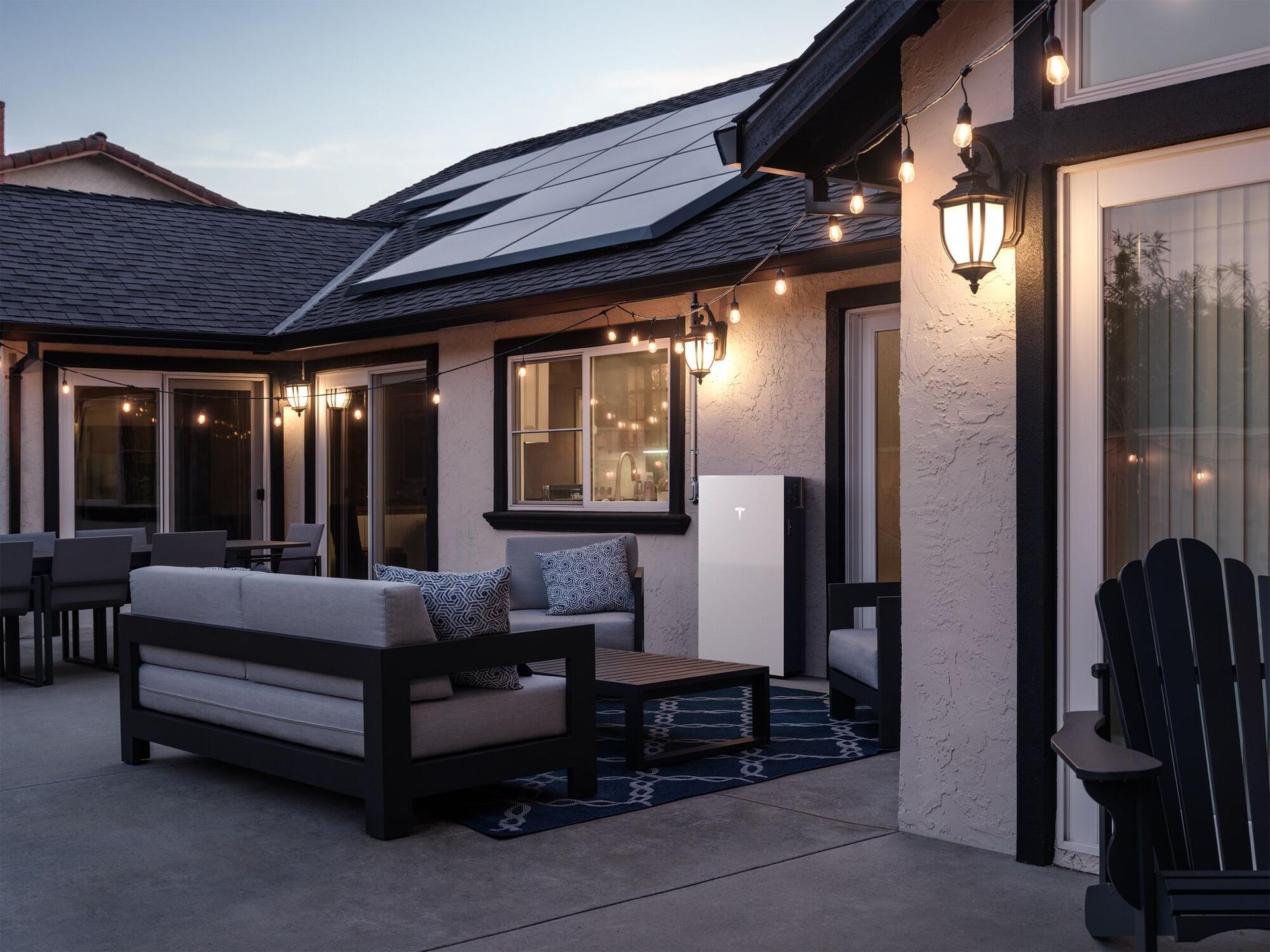
Under NEM 3.0, utilities pay far less for exported solar than they charge you in the evening. So the savings now come from storing your own daytime solar in a battery and using it during the expensive 4–9 PM peak. That's why a battery is now standard: 93.6% of the solar systems we completed in 2025 included battery storage — roughly 9 in 10 since NEM 3.0 took effect (OC Solar project data, as-of 2026-08-11).
The design this math rewards is specific: a right-sized array paired with a battery that shifts your midday production into the peak window — our median system is 7.8 kW, running 8.1 kW in 2026, and over 95% of the batteries we install are Tesla Powerwall (OC Solar project data, as-of 2026-08-11). Without the federal credit, our current modeling projects a simple payback of roughly 8–12 years for a typical cash-purchased solar-plus-battery system, generally faster where rates are highest. Model your own bill in our solar savings calculator, and see the full worth-it math for 2026.
How to vet any incentive claim in 2026 (and how we quote them)
A five-question filter catches nearly every stale or inflated incentive pitch this year. Does the quote claim a 30% federal tax credit on a purchase? Expired — walk away. Does it promise the system costs you nothing? Nothing does; someone pays, and the contract says who. Is an SGIP rebate assumed without confirming your income eligibility and the budget's current status? On a lease or PPA, is the 48E value shown as a price you can compare, or waved at as a vague 'government incentive'? And is every remaining claim — property-tax exclusion, rate assumptions, payback projection — written into an itemized proposal you can hold them to?
That last question is how we operate by default. OC Solar has installed solar, battery, and electrical work across Southern California since 2016 — 30+ MW installed, completed projects in 232 California cities (OC Solar project data, as-of 2026-08-11), a 4.8-star Google rating, CSLB #1023627 — and ConsumerAffairs named us the #1 solar company in California for 2026. Our proposals show the incentive math next to the price with as-of dates, and once your system is installed we typically have SCE permission-to-operate about nine days after submission — the median across 1,450 projects (OC Solar project data, as-of 2026-08-11). If you want the 2026 answer for your own address — which incentives you qualify for and what the rate math projects — start with a free, itemized estimate. No pressure, no dead credits, no rebates you cannot get.
FAQ
The federal residential solar tax credit (IRC §25D) expired December 31, 2025 — so in 2026 there is no federal tax credit for homeowners who buy a system with cash or a loan. The commercial §48E credit survived: on lease, PPA, and prepaid plans, the financier claims it and passes roughly 30% of value through as a lower price, through about 2027.
Not for cash or loan buyers — the federal residential credit expired Dec 31, 2025. The 30% value remains on $0-down lease/PPA plans, where the financier claims the §48E credit and passes the savings to you through about 2027.
No. California has no state solar income-tax credit. The state benefits are the permanent property-tax exclusion (for systems qualifying before 1/1/2027), net billing, and certain utility/local programs.
Four real ones. SGIP's income-qualified Residential Solar and Storage Equity budget, with $280 million authorized and posted rates of $1,100 per kWh for storage and $3,100 per kW for paired solar. The permanent property-tax exclusion for systems qualifying before January 1, 2027. The roughly 30% Section 48E value passed through on lease, PPA, and prepaid plans. And the rate structure itself: NEM 3.0 plus 4-9 PM time-of-use pricing, which pays a solar-plus-battery system every evening. There is no California state solar income-tax credit and never has been.
Under the one budget still accepting new residential applications in 2026 — the income-qualified Residential Solar and Storage Equity budget, waitlisted where territory funds are fully reserved — the CPUC's posted rates are $1,100 per kWh for battery storage and $3,100 per kW for paired solar. The general-market budgets most people mean by SGIP, including Equity Resiliency at $1,000 per kWh, were funded through 2025 and are largely closed. Budget status changes, so confirm against the live SGIP tracker before counting on a number.
Primarily income-qualified households. The open Residential Solar and Storage Equity budget is available to low-income residential customers statewide — including, as applications open, customers of publicly owned utilities such as LADWP — with $280 million authorized and reservations accepted since June 2, 2025. Applicants must meet the program handbook's eligibility criteria and enroll in a qualified demand-response program. General-market households should not assume an SGIP rebate in 2026.
The meaningful 2026 development is that SGIP's income-qualified Residential Solar and Storage Equity budget extends to publicly owned utility customers, with LADWP applications opening per the CPUC's program page — a battery-incentive pathway City of Los Angeles households have rarely had. Separately, LADWP is a municipal utility outside the CPUC's Net Billing Tariff, so it sets its own net-metering and rate rules, which can treat exported solar differently than SCE, SDG&E, or PG&E.
Sources
- 1.IRS — Residential Clean Energy Credit (Section 25D) — Internal Revenue Service · accessed 2026-08
- 2.IRS — FAQs for modification of sections 25C, 25D and others under the One Big Beautiful Bill (OBBB) — Internal Revenue Service · accessed 2026-08
- 3.IRS — Clean Electricity Investment Credit (Section 48E) — Internal Revenue Service · accessed 2026-08
- 4.CPUC — Self-Generation Incentive Program (SGIP) — California Public Utilities Commission · accessed 2026-08
- 5.SGIP — Program Metrics (Incentive Step Tracker) — Self-Generation Incentive Program (selfgenca.com) · accessed 2026-08
- 6.SGIP San Diego (SDG&E territory) — Current Incentives — Center for Sustainable Energy · accessed 2026-08
- 7.California Legislative Information — SB 710 Property Taxation: Active Solar Energy Systems (2025) — California Legislative Information · accessed 2026-08
- 8.CPUC — Net Energy Metering and the Net Billing Tariff — California Public Utilities Commission · accessed 2026-08
- 9.SCE — Time-of-Use Residential Rate Plans — Southern California Edison · accessed 2026-08
Compare $0-down Prepaid/PPA (~30% §48E tax credit passed through) vs. cash & loan side by side for your roof — no call required.
Price my 2026 solar + battery incentives in 60s →