Published November 12, 2026 · 5 min read
By Andy Valdez, Marketing & Sales Coordinator
Before anyone asks for seconds, the kitchen has already been running for hours. Potatoes simmer, casseroles bake, and the oven handles the heavy lifting without ever getting a plate.
Beyond the prep work, a practical question remains: how much electricity does cooking Thanksgiving dinner actually use? Tracking that energy offers a clear look at household efficiency and your holiday electricity bill impact.
How Much Electricity Does an Oven Use?
Preparing a full holiday spread drives up power consumption through appliance wattage and run time. If you have ever wondered how many kWh an oven uses for a turkey, the total depends heavily on your bird's weight and roasting temperature.
The Virginia Cooperative Extension calculates electrical draw using this baseline:
Electricity used (kWh) = watts × operating hours ÷ 1,000
An electric oven does not draw peak power constantly. Its heating elements cycle on and off to maintain a targeted temperature, meaning maximum wattage ratings overestimate average consumption.
What Thanksgiving Cooking Costs With SCE
Estimates from Smarter House indicate that preparing a traditional Thanksgiving dinner requires roughly 14 kilowatt-hours (kWh). Applied to SCE’s published tiered rates, that translates to an estimated $4.20 to $5.46 in electricity costs.
With current SCE residential rates averaging $0.30 per kWh for Tier 1 and $0.39 for Tier 2, individual dish costs break down as follows:
| Cooking Task | Cooking Time | Estimated Electricity | Tier 1 Cost | Tier 2 Cost |
|---|---|---|---|---|
| Roast a turkey | 3.5 hours | 7 kWh | $2.10 | $2.73 |
| Baking a casserole | 1 hour | 2 kWh | $0.60 | $0.78 |
| Cooking potatoes | 30 minutes | 0.75 kWh | $0.23 | $0.29 |
| Reheating a side dish | 10 minutes | 0.20 kWh | $0.06 | $0.08 |
Estimates assume an average draw of 2,000 watts for the oven, 1,500 watts for a stovetop burner, and 1,200 watts for the microwave, excluding preheating.
Guidelines from FoodSafety.gov recommend 3 to 3¾ hours at 325°F for an unstuffed 12- to 14-pound turkey. Always verify a safe internal temperature of 165°F with a food thermometer.
How to Save Money on Thanksgiving Dinner
Save your energy for the annual debate over canned versus homemade cranberry sauce. OC Solar recommends the following habits:
- Plan a one oven Thanksgiving dinner: Bake compatible side dishes together whenever recipes allow.
- Rely on the oven light: Opening the oven door drops internal temperatures significantly. Use the window and interior light instead.
- Match cookware to burner size: Covering pots with lids retains steam and prevents wasted radiant heat.
- Shift smaller tasks to the microwave: Using a microwave for side dishes consumes a fraction of the power required for a standard wall oven.
Offsetting Peak Holiday Energy Demand
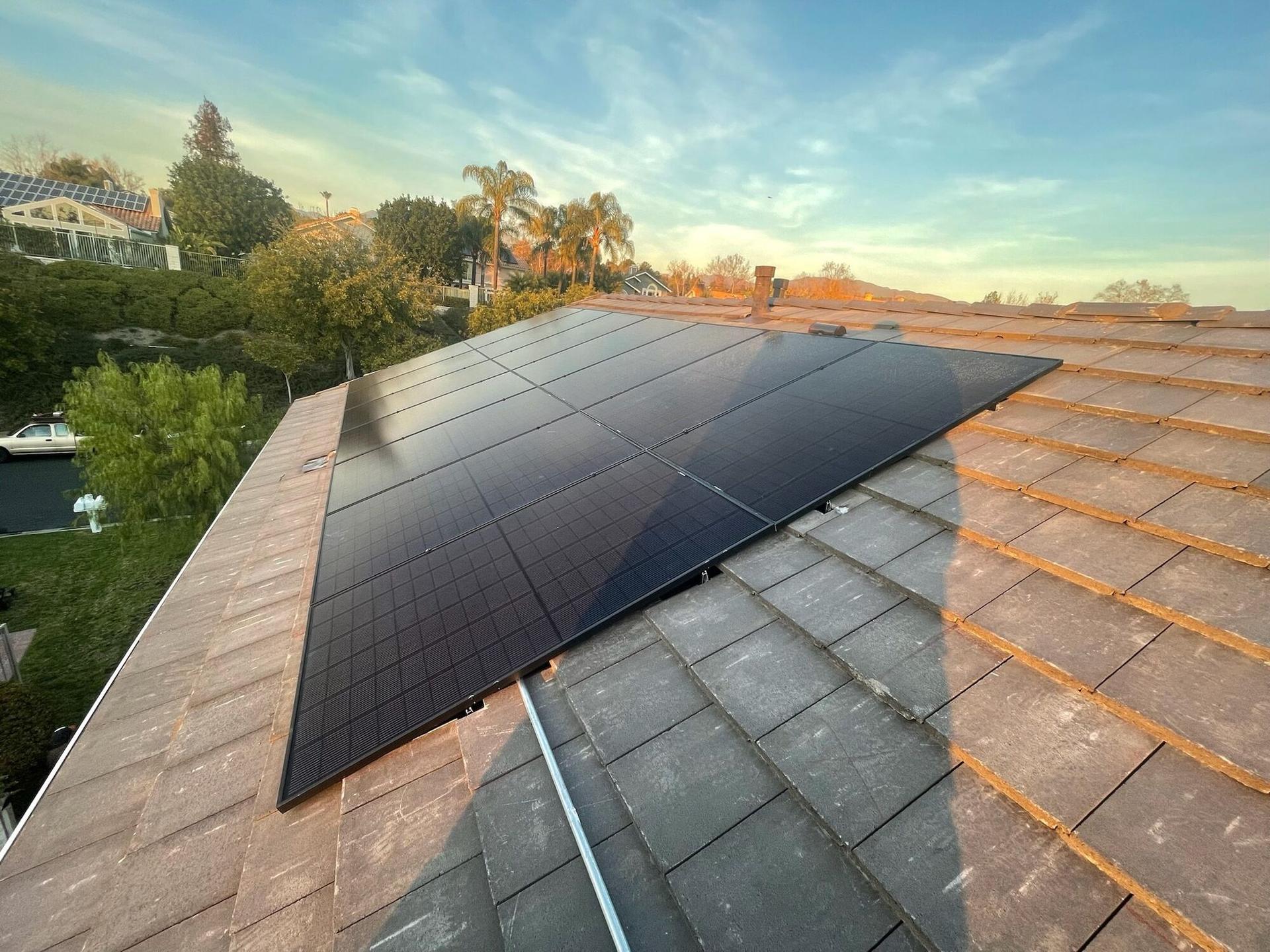
High-use holidays highlight broader patterns in how homes draw grid power. Solar panel installations generate clean electricity to cover heavy daytime appliance use. Paired with home battery storage, excess daytime power can run household loads well past sunset.
Exploring rooftop solar and energy storage offers a long-term way to stabilize utility costs year-round.
Put solar on the menu with OC Solar. Contact our team today to schedule a consultation and discover how solar panels and battery storage can support your home's energy needs. Bring your electricity bill, and we'll leave the secret stuffing recipe to you.
Want to take the sting out of high electric bills all year, not just on Thanksgiving?
Get a free, honest estimate →