
Load path
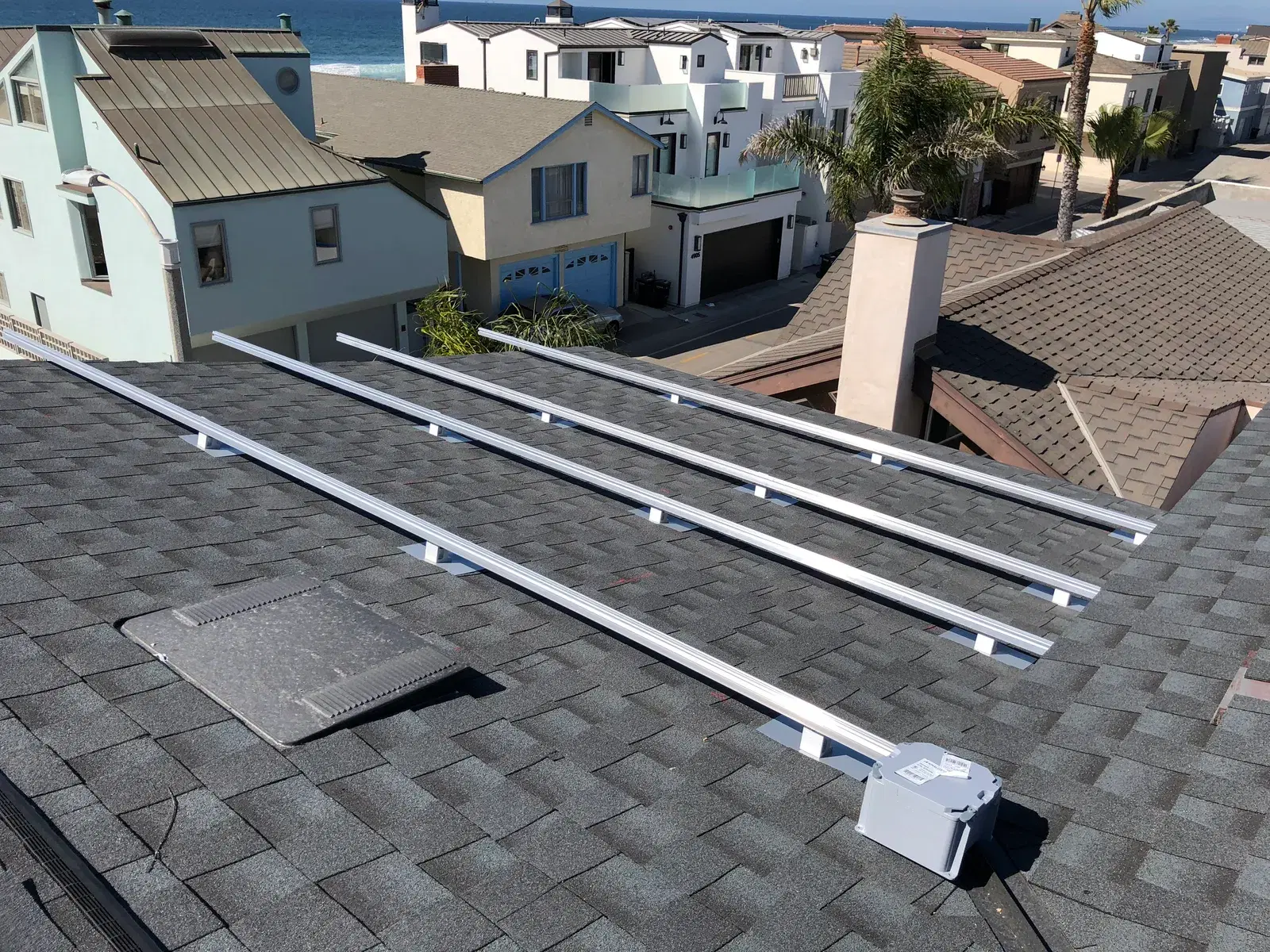
IronRidge describes XR rails as the structural backbone that transfers array loads into the building structure.
Tesla Powerwall Premier Certified· BBB A+· Google 4.8★ (400+)· CSLB #1023627
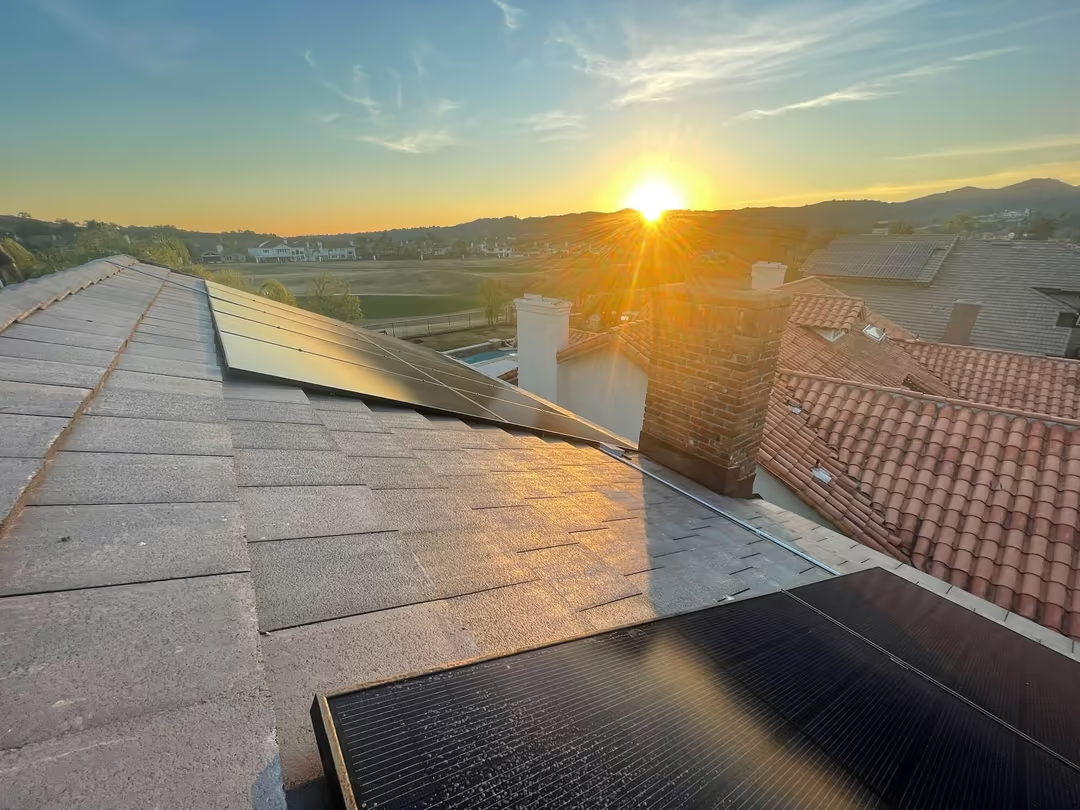
Solar mounting · IronRidge
OC Solar works with IronRidge mounting products when their rail, attachment, and roof-specific options fit the engineered solar design. The mounting system is selected from roof material, structural loading, attachment spacing, waterproofing details, module compatibility, and local code requirements.
Licensed, bonded & insured · CSLB #1023627
The useful answer
Racking is mostly hidden after installation, but it carries every module load into the structure and organizes the array above the roof. IronRidge offers pitched-roof, flat-roof, and ground-based systems, including the XR rail family. OC Solar treats that hardware as an engineered assembly rather than a cosmetic accessory.
The homeowner should be able to ask what attachment and flashing method is being used, how the rails were selected, and how the design accounts for the roof type. Those answers matter more than whether the finished array hides the mounting hardware.
Why it can matter
IronRidge describes XR rails as the structural backbone that transfers array loads into the building structure.
Its pitched-roof portfolio includes options for composition shingle, tile, slate, and other roof conditions.
OC Solar chooses attachment spacing and rail configuration from the approved structural and electrical plan.
Before you approve a proposal
Questions homeowners ask
Yes. OC Solar works with IronRidge and may specify its mounting components when they match the roof type, structural plan, module, electrical layout, and current product availability.
The racking and attachments transfer wind, gravity, and other loads from the modules into the structure. Their layout also affects waterproofing, array appearance, grounding, wire management, and future roof service.
IronRidge offers roof-specific attachment options, but the correct assembly depends on the tile, underlayment, structure, approved engineering, and local requirements. OC Solar verifies those conditions before installation.
More preferred brands
We’ll compare the roof, electrical system, goals, and current equipment options before making a recommendation.