Published June 1, 2026 · Updated September 2, 2026 · 8 min read
The short answer
On a roof, quality solar panels last 25–30 years and usually longer: NREL's review of nearly 2,000 field degradation rates puts the median at 0.5% per year, and its 2022 fleet study measured 0.48% per year in cooler climates versus 0.88% in the hottest zones, so a panel typically still delivers 85–92% of day-one output at year 25. String inverters last 10–15 years, microinverters carry 25-year warranties, and a Tesla Powerwall 3 is warranted for 10 years at 70% capacity.
By OC Solar
The short answer: 25–30 years, usually more
Solar is a big financial commitment, so the first question most homeowners ask is how long the equipment lasts. The short answer: on a roof, quality solar panels last 25–30 years and usually longer — NREL's field data puts median degradation at just 0.5% a year. But a solar system isn't one machine — it's an ecosystem of parts (panels, inverter, racking, and often a battery) that each age at a different rate. Here's what to expect from each on an Orange County roof.
Solar system lifespan by component (2026)
Exact warranties for what we install: solar and Tesla Powerwall 3.
| Component | Typical life | Warranty to expect | What ends it |
|---|---|---|---|
| Solar panels | 25–30+ years | 25 years; at least 86% output at year 25 (Tesla 420 W) | About 0.5% per year degradation |
| String inverter | 10–15 years | About 10–12 years | Heat and electrical stress; plan on one replacement |
| Microinverters or optimizers | 20–25 years | 25 years (Enphase IQ8, US) | Rarely before the panels |
| Tesla Powerwall 3 | 10–15 years | 10 years; at least 70% of 13.5 kWh at year 10; unlimited cycles for solar use and backup | Cycling and heat |
| Racking, wiring, conduit | 25+ years | Installer workmanship warranty | Coastal corrosion without stainless or anodized hardware |
| Roof underneath | Material and age | Separate roofing warranty | Re-roof first if it is near end of life |
Planning ranges, not guarantees. Degradation per NREL/NLR (median 0.5% per year; 0.48–0.88% by climate); warranty terms per the Tesla, Enphase, and EnergySage documents in Sources.
How long solar panels last
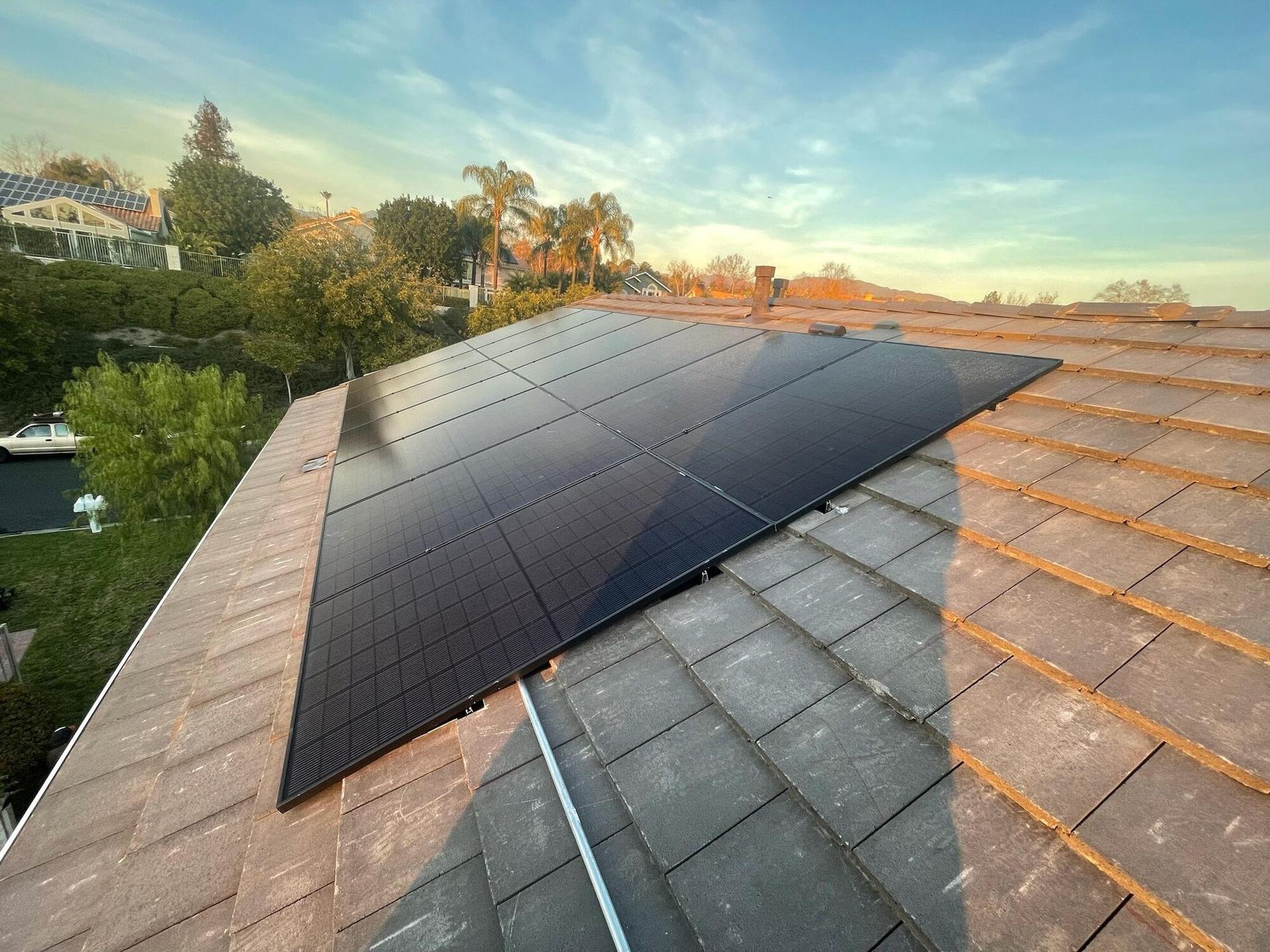
High-quality panels are designed for 25 to 30 years and routinely keep producing well beyond that. They don't simply switch off at year 25 — they slowly make a little less power each year through a process called degradation.
Premium panels degrade at roughly 0.25%–0.5% per year. That means even after 25 years of weather, a good system typically still operates at about 85%–92% of its original output. The National Renewable Energy Laboratory (NREL) notes that today's panels degrade far more slowly than earlier generations. See the panels we install on our products page.
How long do solar panels last on a roof?
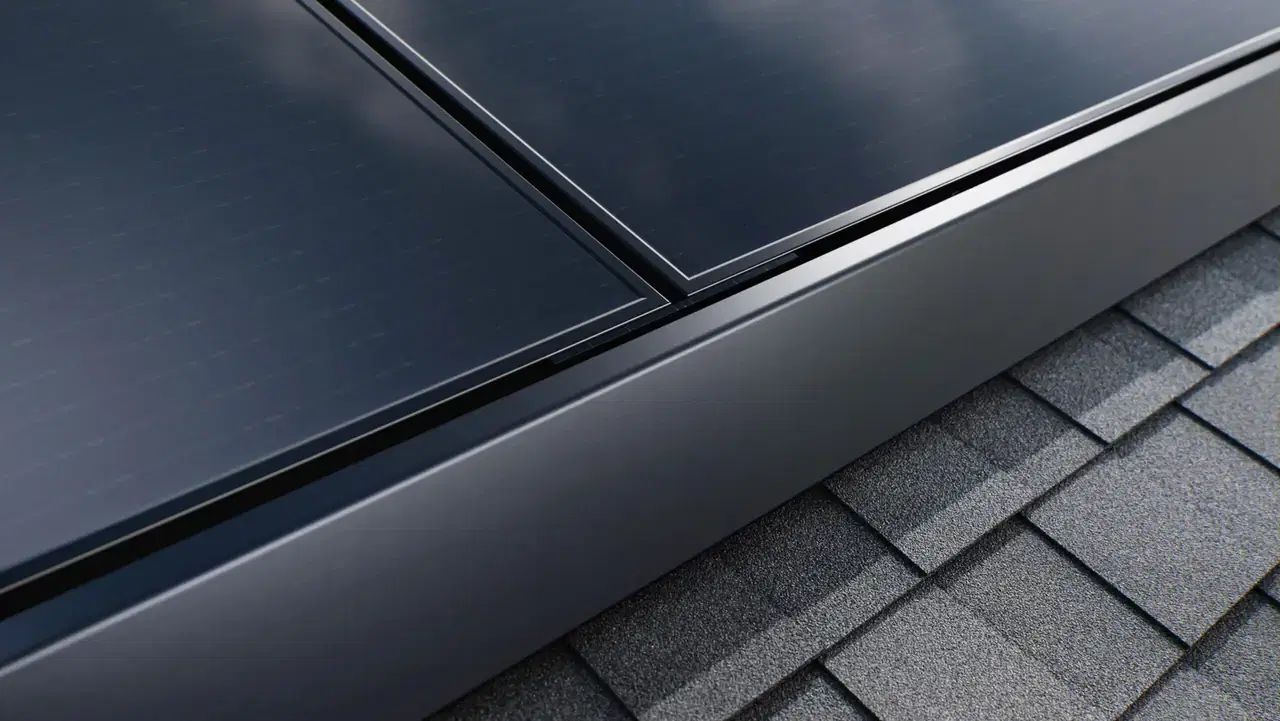
On a roof, quality solar panels last 25–30 years and usually longer — the panels are typically the most durable part of the whole system. Rooftop conditions are what they're engineered for: tempered glass, sealed frames, and anodized-aluminum mounting rated for decades of sun, heat, and rain. The practical limit usually isn't the panel at all — it's the roof underneath and the quality of the original installation.
Three things decide how long panels actually last on your roof: installation quality (correct flashing and mounting prevent the leaks and hot spots that age a system early), the roof's own remaining life (removing and re-installing an array to re-roof later is the expensive path — see whether to replace your roof before solar), and day-to-day exposure. Panels also physically shield the roofing directly beneath them from sun and weather while they work.
Solar panel degradation: what a 25-year warranty actually guarantees
Degradation is gradual — and warranted. As an example of what modern warranties promise, the Tesla 420 W panel's limited power warranty guarantees at least 98% of nameplate output in year one, no more than 0.45% degradation per year after that, at least 93.5% at year 10, and at least 86% at year 25. Those are floors, not averages: premium panels commonly degrade nearer the 0.25%–0.5%-per-year range in practice, which is where the 85%–92%-at-25-years figure in this guide comes from.
| Milestone | Warranted minimum output |
|---|---|
| Year 1 | At least 98% of nameplate power |
| Years 2–25 | No more than 0.45% degradation per year |
| Year 10 | At least 93.5% of nameplate power |
| Year 25 | At least 86% of nameplate power |
Figures from the Tesla Solar Panel 420W manufacturer datasheet (Limited Power Warranty), verified July 2026. Other premium panels we install carry comparable 25-year product and performance warranties — check the datasheet for your specific model.
Do solar panels degrade faster in Southern California's heat?
A little, and it is measurable. NREL's 2022 study of 1,700 U.S. sites found a median performance loss of 0.48% per year in cooler climates versus 0.88% in the hottest zones — yet even at that rate a panel still produces roughly 80% of rated output after 25 years.
On an Orange County roof the risks are inland heat, coastal salt air, and Santa Ana winds; an air gap under the array, stainless hardware near the ocean, and correct flashing matter more than the brand — see our solar panel durability guide.
Inverters: the part you'll likely replace once
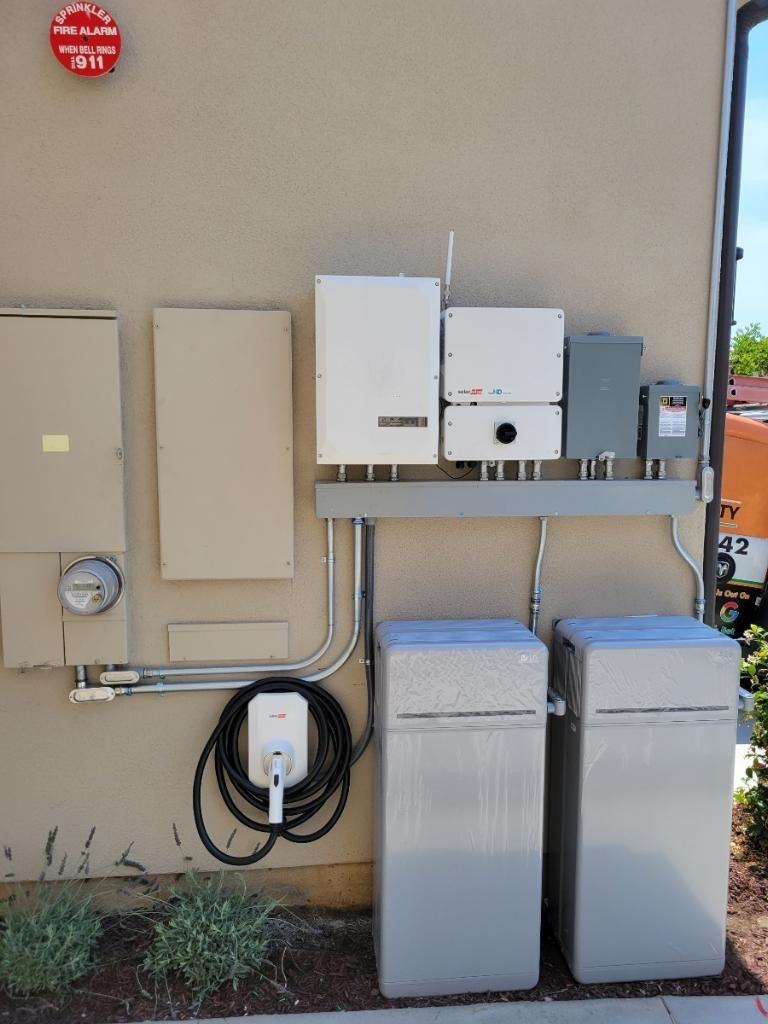
The inverter converts your panels' DC electricity into the AC your home uses, and it works hard every day — so it's usually the first component to need replacing. A central string inverter typically lasts 10–15 years. Microinverters and DC optimizers (mounted at each panel) tend to last longer and often carry 20–25 year warranties that match the panels. We cover the trade-offs on our inverters page.
Home batteries: about 10–15 years
If you add storage, expect roughly 10–15 years of service life. A Tesla Powerwall, for example, carries a 10-year warranty and is rated for daily cycling. Battery life depends on how often it's charged and discharged and on heat exposure — a shaded, well-ventilated install lasts longer. Under NEM 3.0 a battery is now central to your savings, so it's worth sizing correctly. See more on our battery storage page.
Budgeting for the battery? See what a Tesla Powerwall costs in 2026.
Racking, wiring, and the roof underneath
The mounting hardware and wiring are the quiet workhorses — properly installed aluminum and stainless racking and conduit are built to outlast the panels themselves, 25+ years. The bigger lifespan question is usually your roof: solar is warrantied for decades, so if your roof is near the end of its life it's far cheaper to re-roof first. We assess roof condition before any design — see should you replace your roof before solar.
What shortens — or extends — system life
Two things move the needle most: installation quality and basic upkeep. Tight, code-correct connections and proper flashing prevent the water intrusion and hot spots that age a system early. Light maintenance — keeping panels clear of heavy soiling and getting a periodic checkup — keeps production where it should be. See our solar maintenance guide for the specifics.
Warranties to look for
A strong residential system pairs a 25-year product and performance warranty on the panels with a matching warranty on microinverters or optimizers and a 10-year battery warranty. Just as important is who stands behind the workmanship — and whether that company will still be around to honor it. We cover that in what happens if your solar company goes out of business. Ready to talk specifics? Get a free estimate.
FAQ
On a roof, quality solar panels last 25–30 years and usually longer. NREL's review of nearly 2,000 field measurements found a median degradation rate of 0.5% per year, so a panel typically still produces 85–92% of day-one output at year 25; DOE puts average lifespan at 25–35 years. In Orange County the roof underneath usually sets the timeline.
Slightly. NREL's 2022 study of 1,700 U.S. sites measured median losses of 0.48% per year in cooler climates versus 0.88% in the hottest zones — still about 80% of rated output after 25 years. In Orange County, airflow under the array and corrosion-resistant coastal hardware keep degradation toward the low end.
A string inverter typically lasts 10–15 years with a 10–12-year warranty, so most homeowners replace it once — about $2,000–$4,000 installed per 2026 industry estimates. Microinverters last 20–25 years; Enphase IQ8 units carry a 25-year U.S. warranty. In Southern California, keeping a string inverter out of afternoon sun helps.
Plan on 10–15 years. Tesla warrants the Powerwall 3 for 10 years at no less than 70% of its 13.5 kWh capacity, with unlimited cycles for solar self-consumption, time-based control, and backup — built for the daily 4–9 PM discharge that NEM 3.0 rewards in SCE, SDG&E, and PG&E territory.
The panels keep working; year 25 is when the performance warranty ends, not when production stops. NREL puts practical retirement near a 20% output loss, likely around 30 years for today's modules. Then keep running the array, repower it with newer panels and a fresh inverter, or add a battery so it earns more under California's NEM 3.0.
Usually the inverter. A central string inverter typically lasts 10–15 years, while microinverters and optimizers often last 20–25 years. Panels and racking generally outlast the inverter, and home batteries last about 10–15 years.
Roughly 0.25%–0.5% per year for premium panels. Warranties put a hard floor under it: the Tesla 420 W panel, for example, is warranted to lose no more than 0.45% per year after year one and to deliver at least 86% of its rated output at year 25.
Yes. Keeping panels free of heavy soiling protects production, and a periodic professional checkup catches loose connections or failing components before they cause bigger problems — both of which help your system reach and exceed its rated life.
Sources
- 1.End-of-Life Management for Solar Photovoltaics — U.S. Department of Energy · accessed 2026-07-16
- 2.Should I Replace My Rooftop Solar System? — U.S. Department of Energy · accessed 2026-07-16
- 3.Aging Gracefully: How NREL Is Extending the Lifetime of Solar Modules — National Laboratory of the Rockies (formerly NREL) · accessed 2026-07-31
- 4.Homeowner's Guide to Going Solar — U.S. Department of Energy · accessed 2026-07-22
- 5.Powerwall 3 Datasheet — Tesla · accessed 2026-07-22
- 6.Photovoltaic Fleet Degradation Insights (Jordan et al., 2022) — National Laboratory of the Rockies (formerly NREL) · accessed 2026-09-02
- 7.Photovoltaic Degradation Rates — An Analytical Review (Jordan & Kurtz, 2012) — National Laboratory of the Rockies (formerly NREL) · accessed 2026-09-02
- 8.Tesla Powerwall Limited Warranty (USA), Rev. 2.6, effective May 6, 2026 — Tesla · accessed 2026-09-02
- 9.IQ8 Microinverter Limited Warranty — United States — Enphase Energy · accessed 2026-09-02
- 10.Solar Inverter Warranties: What's Covered? — EnergySage · accessed 2026-09-02
Compare repair, replacement, and new-system options around the age and condition of your roof, panels, inverter, and battery.
Plan a long-life solar system →