
Published June 7, 2026 · Updated July 22, 2026 · 8 min read
The short answer
Going solar in California involves a local building permit from your city or county (the AHJ), an inspection, then utility interconnection and final Permission to Operate (PTO). The install itself is quick; the permit, inspection, and utility steps are controlled by agencies and can take weeks. A good installer manages the whole process for you.
By Vinnie Curcie, Founder & CEO, OC Solar
The big picture: who has to say yes
Before your solar system can legally turn on, two outside parties have to approve it: your local Authority Having Jurisdiction (AHJ) — the city or county building department that issues the permit and inspects the work — and your utility, which authorizes the system to connect to the grid and grants final Permission to Operate (PTO). The physical installation is usually the fastest part. The waiting comes from these agency- and utility-controlled steps.
Step 1: design and the building permit (AHJ)
First we design the system and submit a permit application to your AHJ, including engineering and electrical plans. Some California jurisdictions use SolarAPP+ for near-instant automated permitting; others review plans manually, which takes longer. This step is controlled by the building department, so timelines vary by city — from same-day in automated jurisdictions to a few weeks where review is manual. We prepare the package to that jurisdiction's requirements to avoid avoidable rejections.
Instant permits are now the law in most of California
This isn't just installer convenience — it's state law. The Solar Access Act (SB 379, 2022) required every California city and county with a population over 50,000 to adopt an online, automated solar permitting platform by September 30, 2023, and cities of 50,000 or fewer to follow by September 30, 2024. The mandate covers residential solar systems up to 38.4 kilowatts AC and paired battery storage, and the platform must either verify code compliance and issue permits in real time or let the jurisdiction issue them in real time. The smallest jurisdictions are exempt — cities under 5,000 residents, and counties under 150,000 along with their cities.
The state backed the mandate with money and guardrails: the California Energy Commission's CalAPP program put $20 million into grants helping local governments stand up automated permitting (SolarAPP+ qualifies, as do alternatives like Symbium), and under AB 2188, a building department's review of a residential rooftop solar application is limited to whether it meets health and safety requirements — not aesthetics. In practice, how fast your permit moves still depends on which city your roof is in, which is exactly the local knowledge an established installer brings.
Step 2: installation and inspection
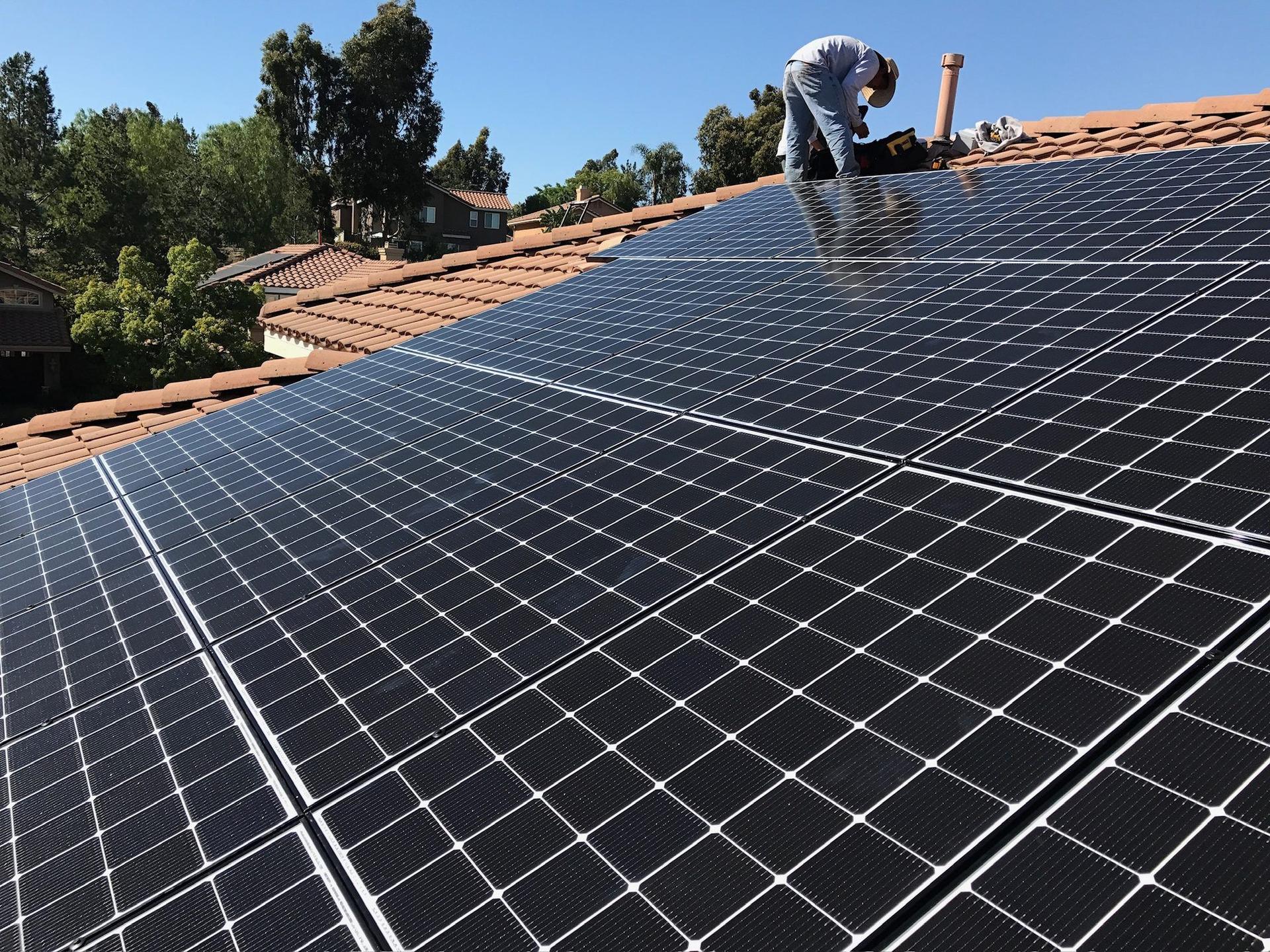
Once the permit is issued, the physical install is typically completed in a day or two for a standard residential system — longer if it's paired with re-roofing or a panel upgrade. After install, the AHJ sends an inspector to verify the work meets code. Inspection scheduling is on the building department's calendar, so the wait depends on local backlog. If the inspector flags anything, we correct it and re-inspect.
Step 3: utility interconnection and PTO
After passing inspection, the project goes to your utility for interconnection approval and Permission to Operate (PTO). This is where you're formally placed on NEM 3.0 (for SCE, SDG&E, or PG&E) and cleared to switch the system on. PTO is entirely on the utility's timeline and is often the longest single wait in the whole process — frequently several weeks. Your system stays off until PTO is granted; turning it on before then isn't permitted.
For PG&E, SCE, and SDG&E, interconnection runs under CPUC Electric Rule 21 — the tariff that sets the interconnection, operating, and metering requirements for connecting a generation system to the utility's distribution grid. The CPUC also requires the utilities to track their interconnection processing timelines and to notify customers when they will, or likely will, miss them (Decision D.20-09-035). Neither changes whose calendar PTO sits on — but it is why you get status updates from us, not guesses, while you wait.
Realistic timelines (and why honesty matters)
End to end, a straightforward residential project commonly runs several weeks to a few months from contract to PTO. The spread is wide because so much of it is outside any installer's direct control — AHJ permit review, inspector scheduling, and utility PTO all move on their own calendars. Any company promising a guaranteed fast turnaround is overpromising on steps it doesn't control. We give you honest expectations and keep you updated at each handoff.
How OC Solar manages the process
We handle the paperwork end to end — permit submittal, scheduling inspections, and the utility interconnection and PTO applications — so you're not chasing your city or utility yourself. Knowing local permit offices and utility processes is exactly where an established, local installer earns its keep: it gets you to PTO with fewer rejections and delays. We've operated in Southern and Central California since 2016 under CSLB #1023627. Ready to start? Get a free estimate.
FAQ
A straightforward residential project commonly runs several weeks to a few months from contract to Permission to Operate. The install itself is quick — the time is in the permit review, inspection scheduling, and utility PTO, which are controlled by the AHJ and utility, not the installer.
PTO is the utility's final authorization to switch your solar system on and connect it to the grid. It comes after the building inspection passes, is on the utility's own timeline (often several weeks), and your system must stay off until it's granted.
Yes. Solar requires a building permit from your local Authority Having Jurisdiction (the city or county building department), plus an inspection and utility interconnection approval. Under the Solar Access Act (SB 379), most California cities and counties must now offer online automated permitting — platforms like SolarAPP+ — for residential solar up to 38.4 kW AC and paired storage, which can cut permit review from weeks to minutes; jurisdictions that still review plans manually take longer.
SolarAPP+ is an automated permitting platform developed by the National Renewable Energy Laboratory. It runs a standardized code-compliance check on residential rooftop solar and solar-plus-storage applications and supports real-time permit issuance in participating jurisdictions. California's Solar Access Act pushed most cities and counties to adopt it or an equivalent, and the state's CalAPP grant program funded local adoption.
Most, but not all. SB 379 required jurisdictions with more than 50,000 people to adopt automated permitting by September 30, 2023, and cities of 50,000 or fewer by September 30, 2024 — but cities under 5,000 residents and counties under 150,000 (along with their cities) are exempt, and real-world implementation varies. Part of our job is knowing exactly how your city processes solar permits.
Interconnection and PTO run on the utility's calendar under CPUC Electric Rule 21, and PTO is often the longest single wait in the process. The CPUC requires utilities to track interconnection timelines and notify customers of expected misses, but no installer controls that clock — which is why honest installers give a realistic range rather than a guaranteed fast turnaround.
Sources
- 1.U.S. Department of Energy — Streamlining Solar Permitting with SolarAPP+ — U.S. Department of Energy (Solar Energy Technologies Office) · accessed 2026-07
- 2.California Energy Commission — Residential Solar Permit Reporting Program (SB 379) — California Energy Commission · accessed 2026-07
- 3.CPUC — Net Billing Tariff (NEM 3.0) — California Public Utilities Commission · accessed 2026-07
- 4.SCE — Solar Billing Plan FAQs — Southern California Edison · accessed 2026-07
- 5.CSLB — Check a Contractor License — Contractors State License Board (California) · accessed 2026-07
- 6.California Legislative Information — SB 379, Solar Access Act (2022) — California Legislative Information · accessed 2026-07
- 7.CEC — California Automated Permit Processing Program (CalAPP) — California Energy Commission · accessed 2026-07
- 8.CPUC — Electric Rule 21 Interconnection — California Public Utilities Commission · accessed 2026-07
Start with your address and system needs to put a concrete design behind the permit and utility process.
Plan my solar project →