Published July 7, 2026 · Updated September 2, 2026 · 8 min read
The short answer
The best roof for solar panels is a south- or southwest-facing plane pitched between 15 and 40 degrees (U.S. Department of Energy guidance) on composition shingle or standing-seam metal — shingle is the cheapest to mount on; metal clamps on with zero penetrations and lasts 40–75+ years, outliving the panels. Southern California's concrete and clay tile roofs take solar routinely with tile hooks or a comp-out, flat roofs use tilted racking, and roof color makes no meaningful difference. Condition and shade decide more than material: the roof under a 25-year panel warranty should have 25 years left.
By OC Solar
What's the best roof for solar panels? The short answer
The best roof for solar panels is a south- or southwest-facing composition (asphalt) shingle roof pitched between roughly 15 and 40 degrees, with one large, unshaded plane — that pitch-and-orientation sweet spot comes straight from U.S. Department of Energy guidance, and shingle is the cheapest material to mount on. But 'best' is a low bar to clear: standing-seam metal arguably beats shingle (panels clamp on with no roof penetrations), the concrete and clay tile roofs on a huge share of Southern California homes take solar routinely with the right mounting hardware, and flat roofs work well on tilted racking.
In practice, the roof you have matters less than its condition and sun exposure. Almost any structurally sound roof with decent sun can host a productive solar system — the material mostly changes how the panels attach and how much labor the install takes. Here's the breakdown by material (scored in the table below), design, color, and the flat-roof case.
The best roof material for solar panels
Composition shingle is the best all-around material for solar: mounts lag-bolt into the rafters through flashed, sealed attachment points, labor is the lowest of any roof type, and it's the most common roof in Southern California. Standing-seam metal is the connoisseur's answer — panels clamp to the raised seams with no roof penetrations at all, and the roof itself tends to outlast the panels.
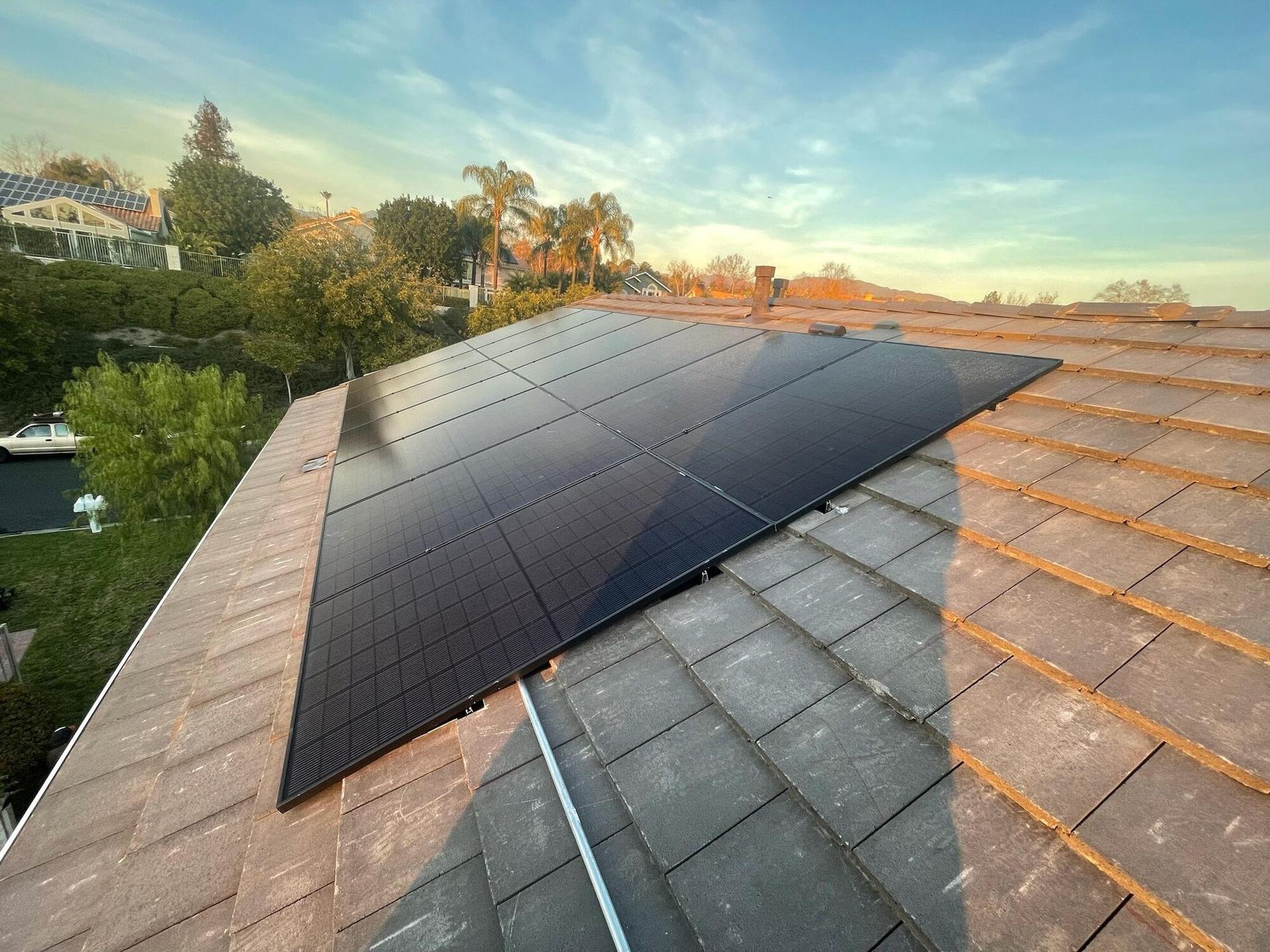
Tile deserves its own note, because so much of Orange County and the Inland Empire is concrete or clay tile. Solar on tile is routine, but it's more labor: crews either mount on tile hooks or perform a 'comp-out' — replacing the tile under the array footprint with flashed composition roofing, then finishing the edges so the array sits flush and watertight. Done well it's clean and durable; done cheaply it's where tile-roof leak stories come from. Insist on crews with real tile experience.
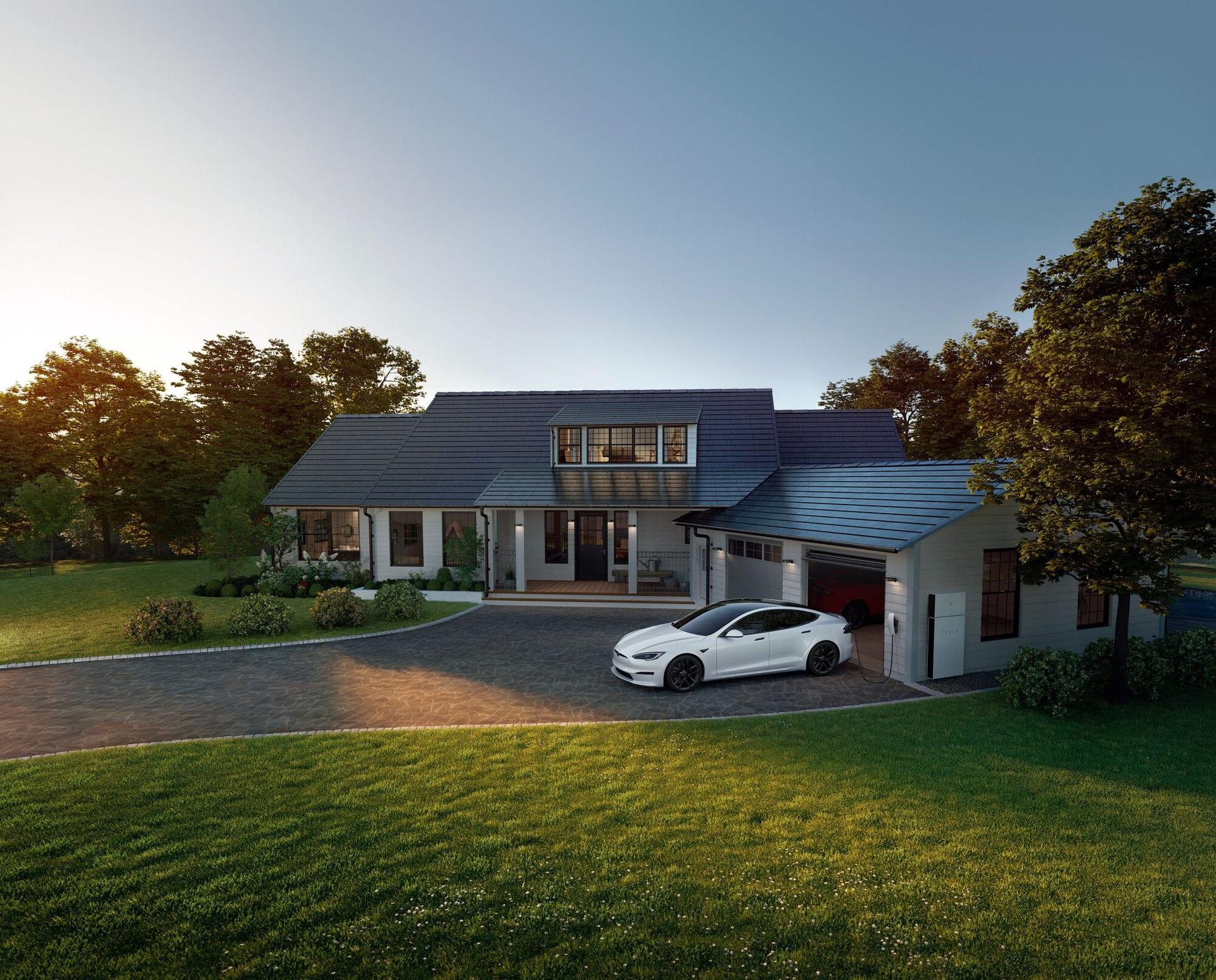
Considering the glass-tile route instead of racked panels? See what a Tesla Solar Roof costs in 2026.
| Roof material | How panels mount | Added cost and complexity | Roof life vs. 25-year panels | Solar fit |
|---|---|---|---|---|
| Composition (asphalt) shingle | Lag-bolted mounts into rafters, sealed with flashing | Lowest labor of any roof — the baseline | About 12–30 years; a shingle roof past its first decade is often replaced before panels go on | 5/5 — the default; the most common roof in Southern California |
| Standing-seam metal | Clamps grip the raised seams — no roof penetrations | Similar to shingle; clamp hardware costs a little more | 40–75+ years — outlasts the panels | 5/5 — arguably the best solar roof |
| Concrete tile | Tile hooks, or a 'comp-out' that swaps tile under the array for flashed composition | Higher — more labor and tile handling | Tile class runs 100+ years — outlasts the panels; tiles can crack during install | 4/5 — routine across Orange County with a tile-experienced crew |
| Clay tile | Same tile hooks or comp-out, with more breakage | Highest of the pitched roofs — brittle tiles, careful foot traffic | 100+ years — outlasts the panels | 3/5 — workable; budget extra labor |
| Flat / low-slope (TPO, foam, torch-down, tar and gravel) | Tilted racking, attached or ballasted | Moderate — wind and drainage engineering, membrane-specific flashing | Roughly 20–30 years for tar-and-gravel membranes; confirm remaining life first | 4/5 — strong production, invisible from the street |
| Wood shake | Not mounted on directly | Re-roof cost comes first | Brittle and a fire concern | 1/5 — re-roof, then solar |
Lifespans per EnergySage's roof-material guide (asphalt 12–30 years, metal 40–75+, tile 100+, tar and gravel 20–30); the fit score is OC Solar's design-team rating, not an industry standard. Condition and sun exposure decide more than material, and roof condition is part of every assessment.
The best roof design for solar panels
The best roof design for solar is a simple one: large, unbroken, south- or west-facing planes with a moderate pitch — DOE guidance puts the ideal slope between 15 and 40 degrees — and few obstructions. Gable roofs tend to offer bigger uninterrupted planes than hip roofs, whose triangular faces shrink the usable area; vents, dormers, and skylights each carve panels out of the layout.
Orientation matters, but less absolutely than it used to. South-facing planes produce the most energy across the year, yet under NEM 3.0 the value of solar comes from covering your own usage — especially the expensive 4–9 PM peak — rather than exporting. A battery stores midday production for the evening, which is why we'll happily design on east- and west-facing planes too; west roofs in particular keep producing into the late afternoon. Shade is the real enemy: a chimney or tree shadow crossing the array costs more than a compass heading ever will, and it's why we model your specific roof rather than quoting from a template.
If you're designing a new roof or an ADU with solar in mind, the best roof design for solar panels checks four boxes: one large plane facing south or southwest; a pitch between 15 and 40 degrees (roughly a 3:12 to 10:12 slope); vents, skylights, and chimneys pushed to the north side; and no trees positioned to shade that plane in five years. Under NEM 3.0, adding battery storage matters more than the last few degrees of orientation.
Best solar roof vs. best roof for solar: two different questions
'Best solar roof' means one of two things. If you're asking which roof is best for standard panels, the answer above stands: standing-seam metal or composition shingle, facing south or southwest, pitched 15–40 degrees. If you mean a roof that is itself the solar — glass tiles replacing the roofing entirely — that's the Tesla Solar Roof, which we install and which makes sense when you're re-roofing anyway; the numbers are in our Tesla Solar Roof cost guide.
There's a middle path for homes whose roof is near the end of its life: re-roof and install panels as one project with one contractor. Our roofing team installs the new roof, flashes the solar penetrations as part of the roofing scope, and the panels go on under a single workmanship warranty. Panels carry 25-year warranties, so the roof underneath should be ready for the same horizon; see how long a solar system lasts.
Does roof color matter for solar panels?
No — roof color has no meaningful effect on how much energy solar panels produce. Panels sit above the roof on racking with an air gap beneath them, and their output is governed by the sunlight hitting the cells and the airflow that cools them, not by the color of the shingles underneath.
Two nuances. Panels do produce slightly less when they run very hot, but that's a function of sun and ventilation, not shingle color. And a lighter 'cool roof' can keep your attic cooler and trim summer air-conditioning load — a building-efficiency benefit worth having, just not a solar-production one. Where color genuinely matters is looks: modern all-black panels disappear best against dark roofs, which is an aesthetics call, not an engineering one.
Can you put solar panels on a flat roof?
Yes — flat and low-slope roofs take solar well. Panels mount on racking that tilts them up toward the sun, either anchored to the structure or held down by ballast weight with no penetrations, with the layout engineered for wind and for the roof's drainage paths.
Flat roofs even carry a few advantages: the array is usually invisible from the street, panel rows can be aimed at the ideal direction regardless of which way the building faces, and maintenance access is easy. Membrane and foam surfaces need a mounting plan matched to the roofing material — standard practice on the commercial projects we build, and the same engineering applies to flat-roofed homes.
What if your roof isn't a good candidate?
A less-than-ideal roof narrows the design, but it rarely ends the conversation. Shaded or complex roofs get panel-level electronics — microinverters or optimizers — so one shadow doesn't drag down the whole array. A roof near the end of its life should be replaced before panels go up, and if you're re-roofing anyway, the Tesla Solar Roof folds the new roof and the solar into one integrated surface.
The honest way to find out where your roof lands is to have someone model it. We assess roof condition, orientation, shade, and mounting approach as part of every design — get a free estimate and we'll tell you what your roof can actually produce, and whether we'd put panels on it at all.
FAQ
A south-facing roof with a slope between about 15 and 40 degrees, per U.S. Department of Energy guidance — and in material terms, composition (asphalt) shingle, the easiest and most cost-effective surface to mount on. Standing-seam metal is arguably even better because panels clamp on without penetrations. In practice, condition and sun exposure decide more than material: almost any sound roof with decent sun can host a productive system.
Composition (asphalt) shingle is the best all-around: lowest labor, simple flashed attachments, and it's the most common roof in Southern California. Standing-seam metal is excellent — clamp-on mounting with zero roof penetrations. Concrete and clay tile work routinely with tile hooks or a comp-out but take more labor. Wood shake is the one common material that usually means re-roofing before solar.
South-facing planes produce the most across the year, but under NEM 3.0 orientation matters less than it used to — the savings come from covering your own usage, especially the 4–9 PM peak, and a battery stores midday production for the evening. East- and west-facing arrays are routinely worth designing, and west roofs keep producing into the late afternoon. Heavy shade hurts far more than a non-south heading.
Not meaningfully. Panels sit above the roof on racking with an air gap, and production is governed by sunlight and airflow, not the color underneath. Panels produce slightly less when they run very hot, but that's about sun and ventilation. A lighter roof can keep the attic cooler and trim AC load — an efficiency benefit for the house, not the solar. Color mostly matters for looks: all-black panels blend best with dark roofs.
Yes, well. Panels mount on tilted racking that's either anchored or ballasted — held in place by weight, with no roof penetrations — and the layout is engineered for wind and drainage. Flat roofs even have advantages: the array is usually invisible from the street, rows can face the ideal direction regardless of the building's orientation, and service access is easy.
Yes — tile roofs are one of the most common surfaces for solar in Southern California. Crews mount on tile hooks or perform a comp-out, replacing the tile under the array with flashed composition roofing so the panels sit flush and watertight. It takes more labor than a shingle roof, so insist on installers with real tile experience.
For mounting standard panels, standing-seam metal is the best solar roof — panels clamp to the raised seams with no roof penetrations — with composition shingle a close, budget-friendly second. If you mean a roof that IS the solar, that's the Tesla Solar Roof: glass tiles that replace the roofing material entirely.
A simple gable roof with one large, unbroken plane facing south or southwest, pitched between 15 and 40 degrees per U.S. Department of Energy guidance, with vents, skylights, and chimneys kept off that plane. Hip roofs split the area into smaller triangles and cost panels. In Southern California under NEM 3.0, a west-facing plane paired with a battery is often worth as much as a south-facing one, because the value sits in the 4 to 9 PM peak.
By shape, a gable roof beats a hip roof because it offers bigger uninterrupted planes, and flat roofs work well on tilted racking that can face any direction. By material, composition shingle and standing-seam metal score 5 out of 5 in our table, concrete and clay tile work with tile hooks or a comp-out, and wood shake should be re-roofed first. Shingle and concrete tile are the two roofs we mount on most often across Orange County.
If you are re-roofing before solar, architectural composition shingle is the best-value roofing for panels: it mounts with simple flashed attachments and carries a limited lifetime shingle warranty, matching the 25-year panel warranty. Standing-seam metal is the premium choice, with 40 to 75-plus years of life and clamp-on mounting that needs no penetrations. Across Southern California we re-roof and install solar as one project under one warranty.
Sources
- 1.DOE — Homeowner's Guide to Going Solar — U.S. Department of Energy · accessed 2026-07-21
- 2.EnergySage — The Best Roofing Material for Solar Panels — EnergySage · accessed 2026-09-02
- 3.OC Solar — Roofing (re-roof and solar as one project) — OC Solar · accessed 2026-09-02
Review roof condition and solar design together before deciding what needs replacing.
Plan my roof + solar project →