
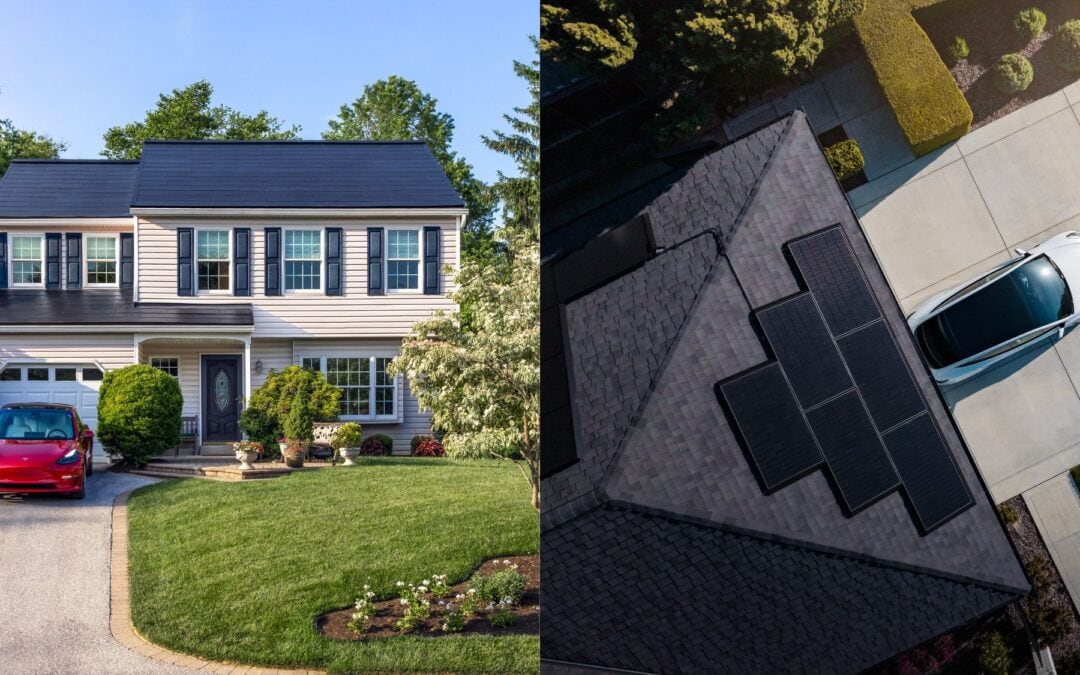
When most homeowners think of Tesla and solar energy, they picture sleek technology, clean design, and lower electric bills. But Tesla actually offers two very different solar solutions: the Tesla Solar Roof and Tesla Solar Panels.
At first glance, they may seem like the same product. After all, both generate electricity from sunlight and can be paired with a Tesla Powerwall battery. However, the similarities largely stop there.
One option replaces your entire roof with solar shingles. The other installs traditional solar panels on top of your existing roof. Depending on your home’s condition, budget, and long-term goals, one may make far more sense than the other.
Let’s break down the differences.
What Is the Tesla Solar Roof?
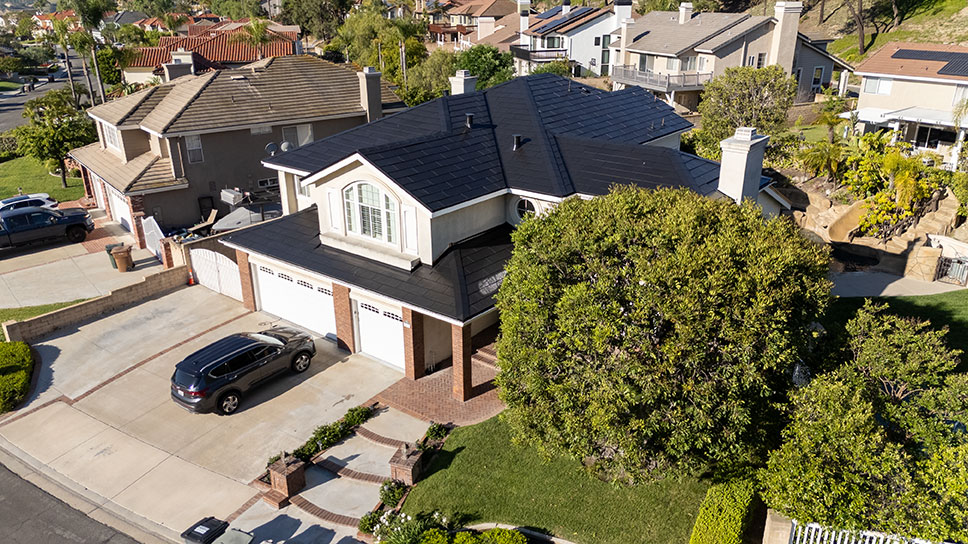
The Tesla Solar Roof is a complete, fully integrated roofing system that combines active solar-producing glass tiles and non-producing glass tiles to replace a home’s traditional roofing materials.
From the street, it looks more like a premium roof than a solar installation. This aesthetic appeal is one of the biggest reasons homeowners choose the Tesla Solar Roof.
Because it functions as both a roof and a solar system, it is typically considered during major renovations, new home construction, or when an existing roof is nearing the end of its lifespan.
What Are Tesla Solar Panels?
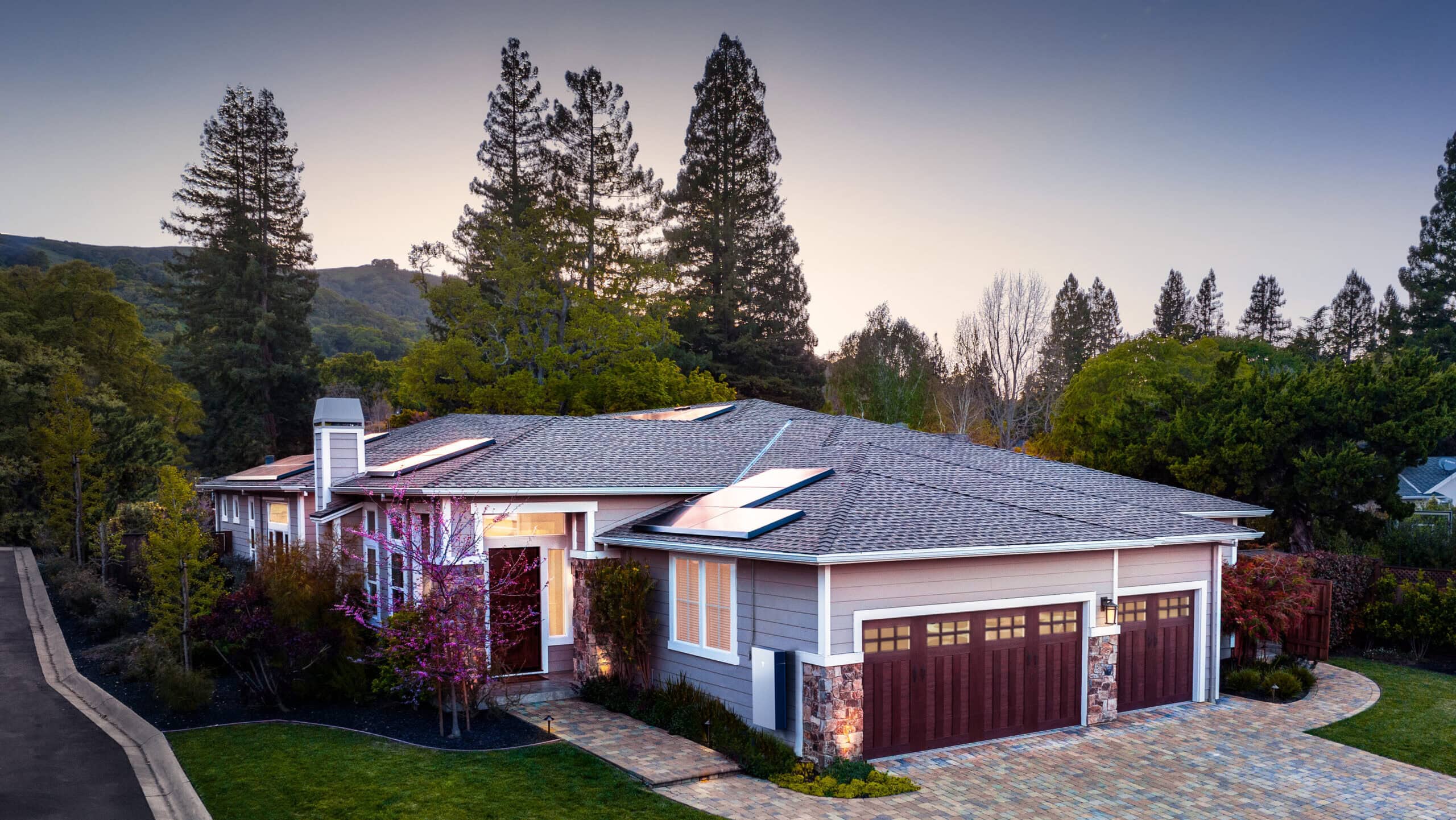
Tesla Solar Panels are traditional photovoltaic (PV) panels that are mounted directly onto your existing roof. They work just like most residential solar systems and convert sunlight into electricity that can power your home.
Unlike the Solar Roof, Tesla Solar Panels do not replace your roofing materials. If your roof is in good condition, panels can usually be installed much faster and at a significantly lower cost.
For homeowners whose primary goal is maximizing savings and energy production, solar panels are often the more practical choice.
Pros and Cons
Pros of the Tesla Solar Roof
- Premium curb appeal
- Integrated roofing and solar solution
- Can be ideal during roof replacement projects
- Durable glass tile construction
Pros of Tesla Solar Panels
- Lower upfront cost
- Higher energy production efficiency
- Easier access to service and perform maintenance
Cons of the Tesla Solar Roof
- Much higher upfront cost
- Longer installation timelines
- Lower efficiency compared to many premium solar panels
Cons of Tesla Solar Panels
- More visible appearance
- Existing roof must be in good condition
- Separate roof replacement may still be needed later
Cost Comparison of the TSR and Tesla Panels
For most homeowners, cost is where the biggest difference between these two products becomes clear.
A typical Tesla Solar Panel system generally costs between $30,000 and $60,000 before incentives, depending on system size, roof complexity, and whether battery storage is included. For many homeowners, the average installation falls somewhere in the mid-$40,000 to mid-$50,000 range.
A Tesla Solar Roof, on the other hand, is both a roof replacement and a solar energy system. As a result, costs are significantly higher. Most installations start at $100,000 and up. Homes with complex rooflines, steep pitches, or larger energy needs can see costs climb even higher.
The price difference can be substantial, but it’s important to remember that a Solar Roof is replacing two products at once: your roofing material and your solar system. For homeowners who already need a new roof, some of that premium can be offset by avoiding the cost of a separate roof replacement project.
Comparing Warranties
Both options come backed by a robust 25-year product and performance warranty, which is among the strongest guarantees in the renewable energy industry. However, the scope of what is actually protected differs:
With Tesla Solar Panels, the warranty strictly covers the panel hardware, manufacturing defects, and power output performance. Your underlying roof remains a separate component covered by your original roofing manufacturer.
With the Tesla Solar Roof, Tesla provides an all-in-one warranty that covers power generation, weatherization, and the physical integrity of the glass tiles themselves. It protects both your home’s primary shield against the elements and its energy generation system under one umbrella.
Which Option Is Better?
The right choice boils down to a quick assessment of your home’s current state and your financial goals:
- Choose Tesla Solar Panels if: your roof is 10–15 years old or newer, you want to maximize your immediate return on investment, and your primary goal is to slash your monthly utility bill at the lowest possible upfront cost.
- Choose a Tesla Solar Roof if: You are building a new home or need to replace an aging roof, you plan to stay in your home long-term, and you place a massive premium on luxury curb appeal and architectural integration.
Think of it this way: Tesla Solar Panels are often the financially smarter decision, while the Tesla Solar Roof is the premium luxury option.
Final Thoughts
Both Tesla Solar Roofs and Tesla Solar Panels can help homeowners reduce their dependence on utility companies and take greater control of their energy costs. The right choice comes down to your budget, the condition of your roof, and what matters most to you: maximum savings or maximum curb appeal.
At OC Solar, we help homeowners navigate these exact choices. Whether you are interested in maximizing your savings with Tesla Solar Panels, securing backup power with a Tesla Powerwall, or designing a complete home energy ecosystem, our expert team is here to help.
Contact OC Solar today for a customized solar consultation and savings analysis!